Most problems with a crushing plant appear months after installation, not on the first day. This guide explains a ready-mix supplier with two plants and how crushed volcanic rock can avoid the common failures. The reference case is a 144 t/h operation in Mexico.
The operating context matters as much as the machine specification. In Mexico, a ready-mix supplier with two plants works in a varied climate from coastal humidity to highland dry heat. A plant specified for this market normally includes a specification that covers both corrosion and dust protection, and the layout is planned around crushed volcanic rock rather than a generic aggregate.
Screening efficiency
Screen efficiency depends on bed depth, stroke, angle and mesh condition. Overloading a screen with a thick bed lets fine material ride over the mesh into the oversize, which then returns to the crusher and inflates the circulating load. Keeping the bed to a few particle layers is the single most effective improvement.
Mesh condition is often overlooked. Worn or broken wires change the effective aperture and let oversize into the product. Checking mesh tension weekly and replacing damaged panels promptly protects both product quality and the crusher behind the screen.
Dust control and enclosure
Dust is generated at the crusher discharge, at every conveyor transfer and at the screen. Enclosing the transfer points and fitting a water spray or fog system at the crusher inlet and discharge controls most of the visible dust. Water quantity must be controlled so that the product moisture stays within the limit the customer accepts.
In dry climates a bag filter on the crusher and screen enclosure is more effective than water alone, but it needs regular cleaning to remain efficient. A filter that is not maintained becomes a restriction and can pressurize the enclosure, pushing dust out through every gap.
Material
Abrasion
Typical primary
Typical secondary
Granite, basalt
High
Jaw crusher
Cone crusher
Limestone
Low to medium
Jaw or impact crusher
Impact crusher
River gravel
Medium
Jaw crusher
Cone crusher
Construction waste
Medium
Jaw crusher
Impact crusher
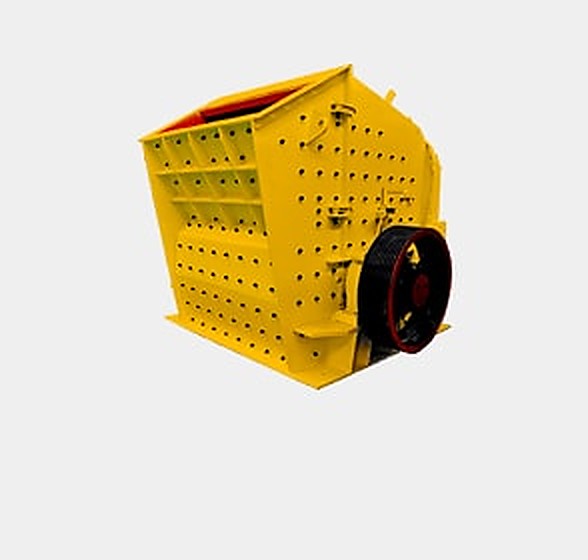
Impact crusher producing well shaped aggregate — HAMAC equipment supplied to concrete and aggregate projects worldwide.
Wear parts and maintenance planning
Jaw plates, cone mantles and bowls, blow bars and screen meshes are the consumables that drive the maintenance budget. Wear rate depends on abrasiveness, feed size and reduction ratio. Tracking wear against tonnes produced gives a reliable forecast for ordering and for budgeting.
Maintenance access should be designed into the plant. A crusher that requires dismantling a conveyor to change a mantle will lose more production than a slightly more expensive design with proper access platforms and a lifting beam.
Mobile and tracked crushing plants
A tracked plant moves with the quarry face or the demolition site and needs no foundation. It reduces haul distance, which is often the largest single cost in aggregate production. Output is lower than a fixed plant of similar power and the cost per tonne of wear parts is usually higher.
Mobile plants suit contracts with a defined volume and a moving work face. For a long-term quarry with a stable location, a fixed plant with a primary mobile unit for face work is often the most economical combination.
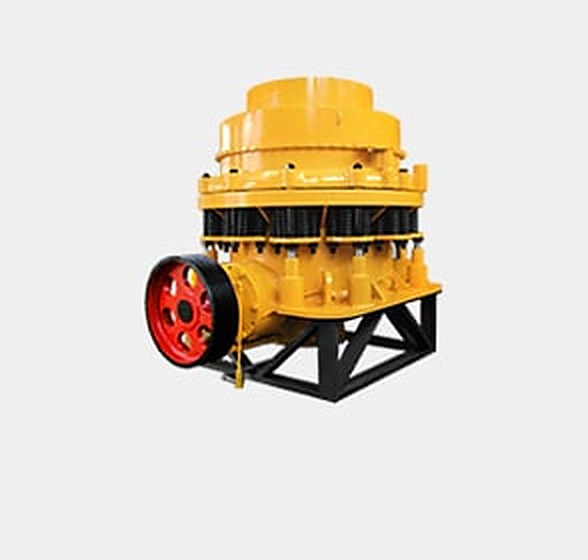
Spring cone crusher for secondary crushing of hard rock — HAMAC equipment supplied to concrete and aggregate projects worldwide.
Manufactured sand production
A vertical shaft impact crusher produces manufactured sand with a cubical shape and a controlled grading. The main challenge is the excess of fines below 75 microns, which increases water demand in concrete. A wet classification or air classification system removes part of that filler and stabilises the grading.
Manufactured sand works well in concrete when the grading is consistent and the fines content is controlled. Variability, not the sand itself, is what causes problems at the batching plant.
Product gradation and specification
Concrete aggregate specifications limit the proportion of flaky and elongated particles, control the fines content and require a grading within defined envelopes. A plant that produces a good average grading but swings outside the envelope between samples will still be rejected by a demanding customer.
Consistency comes from stable feed, constant setting and a screen that is not overloaded. Blending two stockpiles is a practical way to hold a specification when the deposit varies, but it requires separate stockpiles and a controlled reclaim method.
Capacity calculation for a new plant
Calculate backwards from the product. Start with the tonnes of each product required per shift, add the oversize that will be returned, and apply a screen efficiency factor. That gives the crusher throughput. Then check that the primary crusher can accept the largest feed lump at the required rate.
Motor power is a poor indicator of capacity. Two crushers with the same power can differ by 40 percent in throughput depending on cavity, speed and feed characteristics. Supplier references on similar material are the most reliable guide.
Where to go next
For the equipment side, see crushing and screening plants; for plant-level design and layout questions, see aggregate production solutions. If the project is in Mexico or a comparable market, the HAMAC team can provide reference installations and a configuration proposal against your daily output target.
HAMAC can prepare a layout drawing and a budgetary quotation against your daily output target, including the civils information your contractor will need.
Need help applying this to your project?
Send your material type, target output and site conditions to HAMAC engineers. You will receive a practical equipment configuration and a clear quotation, normally within one working day.
Questions about this topic
How much dust does a crushing plant produce?
Dust depends on the rock and the number of transfer points. Enclosing transfers and using water sprays or a bag filter at the crusher and screen controls most visible emissions.
Can a mobile plant replace a fixed plant?
For a moving work face or a defined contract volume, yes. For long-term production at one location, a fixed plant has lower cost per tonne and better access for maintenance.
What screen angle should I use?
Most inclined screens run at 18 to 22 degrees. Steeper angles increase throughput but reduce efficiency; shallower angles improve screening at the cost of capacity.
H
HAMAC Machinery Editorial Team
Written and reviewed by engineers and sales specialists who configure concrete batching plants, crushers, mixers and pumps for projects in more than 180 countries. Content is based on factory testing data and field feedback from delivered equipment.





 Company News

