A plant that runs at its rated output for years is the result of a few correct decisions at the start. This article explains earthmoving equipment and the choices that matter most for a ready-mix company supplying high-rise work using andesite aggregate. The reference case is a a plant yard operation in Indonesia.
The operating context matters as much as the machine specification. In Indonesia, a ready-mix company supplying high-rise work works in tropical heat, humidity and frequent heavy rain. A plant specified for this market normally includes anti-corrosion treatment and electrical protection against moisture ingress, and the layout is planned around andesite aggregate rather than a generic aggregate.
Excavator selection for quarry and foundation work
Excavator selection starts with the bucket and the material. A narrow bucket suits trenching, a wide bucket suits bulk excavation, and a breaker attachment turns the machine into a primary reduction tool. Operating weight and hydraulic flow decide which attachments can be used effectively.
Undercarriage choice matters as much as the upper structure. Tracked machines suit soft or uneven ground, while wheeled machines move between sites without a trailer. On a fixed plant site with hard surfaces, a wheeled excavator can be the more economical choice.
Attachments that extend machine use
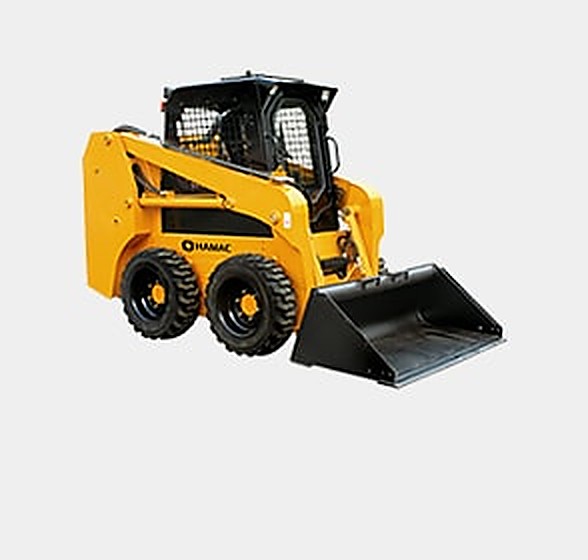
A skid steer loader with a bucket, forks, sweeper and breaker can handle most yard cleaning and material handling tasks. Its small size allows it to work inside plant structures and between stockpiles where larger machines cannot reach.
Attachment standardisation is the practical issue. A quick-coupler system that matches the attachments already on site avoids buying duplicate tools and reduces changeover time.
Machine
Best for
Limitation
Wheel loader
Feeding bins, yard work
Poor on soft or uneven ground
Backhoe loader
Mixed digging and loading
Lower output than dedicated units
Excavator
Bulk digging, quarry face
Needs a trailer to relocate
Skid steer
Cleaning between structures
Limited reach and payload
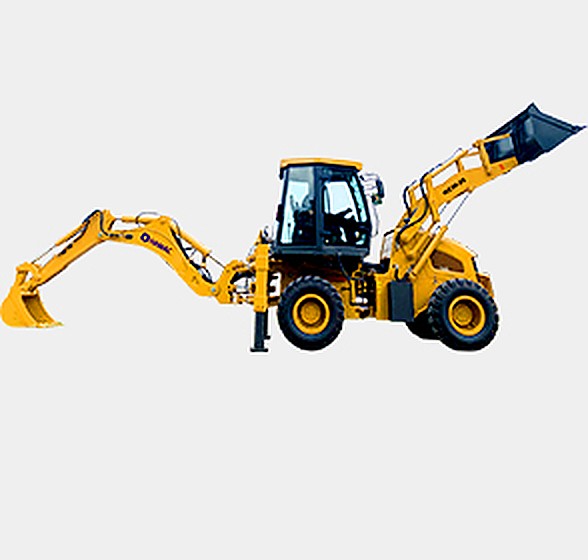
Backhoe loader carrying out site work at a concrete plant — HAMAC equipment supplied to concrete and aggregate projects worldwide.
Fuel, tyres and operating cost
Fuel and tyres typically account for the largest share of an earthmoving machine operating cost. Tyre life depends on surface condition and load: a yard with sharp aggregate spillage will destroy tyres quickly unless the surface is kept clean.
Idling is a hidden cost. A loader waiting for a truck with the engine running burns fuel without producing work. Scheduling deliveries and loading patterns to keep machines working steadily reduces consumption more than any small change in engine specification.
Safety around plant and stockpiles
Stockpile stability is a real hazard. Undercutting a stockpile face can cause a collapse onto the machine or the operator. Keeping the face angle within the material angle of repose and never digging at the toe of a stockpile are basic rules that are frequently ignored.
Traffic management between loaders, trucks and pedestrians is the other major risk. A one-way route, defined crossing points and a clear rule that pedestrians never enter the loading area prevent the most common accidents on concrete plant sites.
Skid steer loader cleaning a concrete plant yard — HAMAC equipment supplied to concrete and aggregate projects worldwide.
Maintenance for dusty environments
Air filters, cooling packs and hydraulic breathers are the parts most affected by dust. Cleaning the cooling pack daily in dry conditions prevents overheating, which is the most common cause of unplanned downtime in hot climates.
Greasing points on pins, bushes and the bucket linkage should follow the manufacturer schedule and be increased in wet or dusty conditions. A pin that runs dry wears quickly and the repair cost is far higher than the grease it needed.
Matching the machine to the task
Earthmoving equipment on a concrete plant does two jobs: feeding aggregate bins and maintaining the yard. A wheel loader is the standard choice because it can travel on hard surfaces at speed and load a hopper repeatedly without repositioning.
Excavators are used for site preparation, foundation work and quarry face loading. A backhoe loader combines a loader and an excavator on one chassis, which suits smaller sites where a single machine must handle several tasks.
Wheel loader sizing for aggregate yards
Loader size should match the batching machine hopper and the distance from the stockpile. A bucket that fills the hopper in two passes is more efficient than one that requires four, and a shorter travel distance allows a smaller machine to keep up.
Bucket capacity quoted in cubic metres refers to heaped volume. Real payload depends on material density: a bucket of sand weighs considerably more than the same bucket of lightweight aggregate. Check the rated load against the densest material on site.
Where to go next
For the equipment side, see earthmoving machines; for plant-level design and layout questions, see project references. If the project is in Indonesia or a comparable market, the HAMAC team can provide reference installations and a configuration proposal against your daily output target.
If you are comparing configurations, share the requirement with HAMAC and ask for a like-for-like quotation with the included scope listed item by item.
Need help applying this to your project?
Send your material type, target output and site conditions to HAMAC engineers. You will receive a practical equipment configuration and a clear quotation, normally within one working day.
Questions about this topic
How do I reduce fuel consumption on loaders?
Reduce idling, match bucket size to the material density, keep tyres correctly inflated and plan truck movements so the loader works steadily.
Backhoe loader or excavator for foundation work?
A backhoe loader is more flexible on a plant site because it also loads and handles materials. An excavator is faster and reaches deeper for bulk excavation.
Can a skid steer loader work inside a plant?
Yes, its small size allows it to clean under conveyors and between structures where larger machines cannot reach.
H
HAMAC Machinery Editorial Team
Written and reviewed by engineers and sales specialists who configure concrete batching plants, crushers, mixers and pumps for projects in more than 180 countries. Content is based on factory testing data and field feedback from delivered equipment.





 Company News

