The difference between an adequate installation and a good one is usually in the preparation. This guide covers precast concrete equipment for a regional ready-mix producer, with river gravel and manufactured sand as the reference material. The reference case is a a precast production line operation in Philippines.
The operating context matters as much as the machine specification. In Philippines, a regional ready-mix producer works in a tropical climate with heavy rainfall and high humidity. A plant specified for this market normally includes corrosion protection, covered storage and reliable drainage around the plant, and the layout is planned around river gravel and manufactured sand rather than a generic aggregate.
Choosing equipment for a new precast yard
Start from the product mix and the required daily output, then size the batching and mixing stage, the moulds and the curing capacity so that none of them is a bottleneck. A yard with excess mixing capacity and insufficient curing racks will simply accumulate product.
Plan for expansion. Land, crane coverage and curing space are difficult to add later, while a mixer or a block machine can be replaced. Buying land and layout flexibility at the start is usually the cheaper decision.
What a precast production line includes
A precast line combines batching, mixing, placing, compaction, curing and demoulding. The equipment set depends on the product: poles, piles and beams use spinning or vibrating moulds, blocks use a stationary or mobile block machine, and pavers use a high-frequency vibrating table.
The batching and mixing stage is shared across products. What changes is the consistency of the mix, the placing method and the cycle time required to fill the moulds without cold joints.
Product
Core equipment
Capacity driver
Concrete poles
Spinning machine and moulds
Spin cycle and curing
Blocks and pavers
Block machine and pallets
Machine cycle per mould set
Kerbs and channels
Slipform paver
Paver speed and mix stiffening
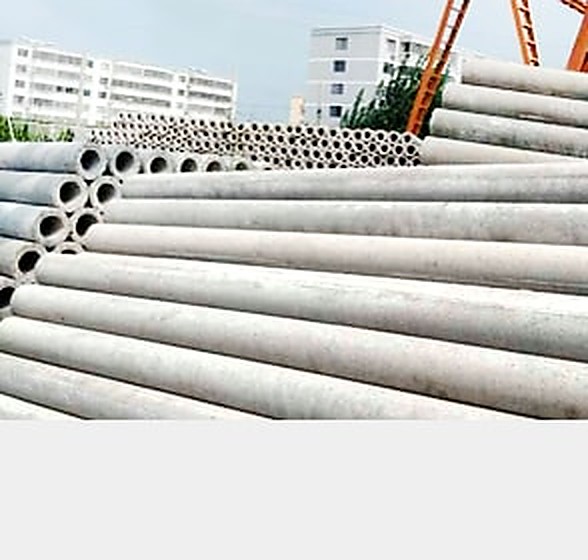
Concrete pole production line with spinning moulds — HAMAC equipment supplied to concrete and aggregate projects worldwide.
Concrete pole production
Poles are produced by centrifugal spinning, which compacts the concrete against the mould wall and expels excess water. The mix needs a controlled slump, a consistent cement content and a gradation that will not segregate during spinning. The spinning speed profile is as important as the mix itself.
Curing follows a defined cycle of rest, steam or ambient curing and demoulding. Rushing the early stage produces surface defects and reduces the long-term strength that the pole needs to carry its design load.
Block and paver production
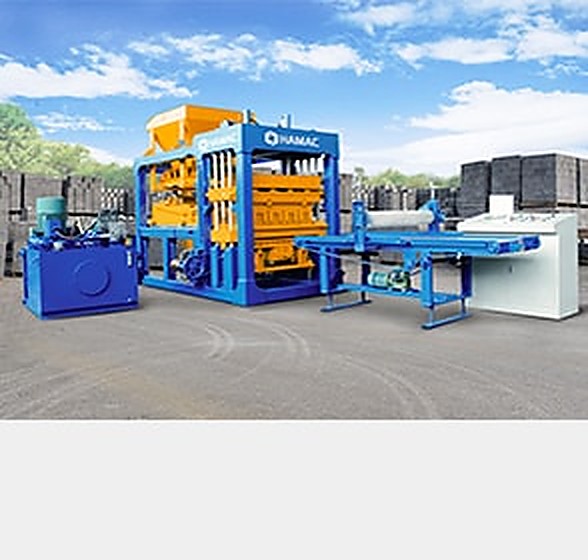
A block machine fills moulds with a semi-dry mix, compacts it by vibration and pressure, then ejects the block onto a pallet. The mix has a very low water content, and the moisture is judged by the block leaving the machine with sharp edges and no sticking.
Curing is where quality is decided. Blocks gain strength slowly in ambient conditions and quickly in a curing chamber with controlled humidity and temperature. Skipping proper curing produces blocks that pass a visual check and fail a strength test.
Concrete block production line with pallet handling — HAMAC equipment supplied to concrete and aggregate projects worldwide.
Slipform paving for kerbs and channels
A slipform paver extrudes a profile from a low-slump concrete mix as it moves forward. The mix must hold its shape immediately after the mould, which means a stiff consistency, a well-graded aggregate and careful control of water. A mix that is too wet collapses; a mix that is too dry tears.
Paver speed, vibration frequency and mould geometry are set together. Changing one without the others produces edge defects that are difficult to repair after the concrete has set.
Mould handling and cycle time
Cycle time is the productivity measure of a precast yard. It covers mould preparation, placing, compaction, curing and stripping. Reducing it usually means improving one of these steps rather than buying a faster machine.
Mould handling equipment, curing racks and a layout that avoids crane conflicts often deliver more output than an upgrade to the mixer. A yard that is well organised with a modest mixer will outperform a poorly organised yard with a large one.
Quality control in precast production
Precast quality is verified by dimensional checks, surface inspection and strength testing of cubes or cores. Because products are made in advance, a defect found after curing is expensive: the whole batch may have to be scrapped.
Recording mix, cycle and curing data for every production run makes it possible to trace a defect back to its cause. That record is also what customers and certification bodies ask for when they audit a supplier.
Where to go next
For the equipment side, see precast concrete equipment; for plant-level design and layout questions, see precast production solutions. If the project is in Philippines or a comparable market, the HAMAC team can provide reference installations and a configuration proposal against your daily output target.
HAMAC can prepare a layout drawing and a budgetary quotation against your daily output target, including the civils information your contractor will need.
Need help applying this to your project?
Send your material type, target output and site conditions to HAMAC engineers. You will receive a practical equipment configuration and a clear quotation, normally within one working day.
Questions about this topic
How much curing space do I need?
Size curing capacity to the daily production multiplied by the curing period. Insufficient curing space becomes the bottleneck long before the mixer does.
What concrete grade is used for poles?
Poles are typically produced at C40 to C60 depending on the design load and the standard applied in the destination market.
How many blocks per hour can a block machine produce?
Output depends on block size and the machine cycle. A mid-size stationary machine typically produces 400 to 900 standard blocks per hour per mould set.
H
HAMAC Machinery Editorial Team
Written and reviewed by engineers and sales specialists who configure concrete batching plants, crushers, mixers and pumps for projects in more than 180 countries. Content is based on factory testing data and field feedback from delivered equipment.





 Company News

