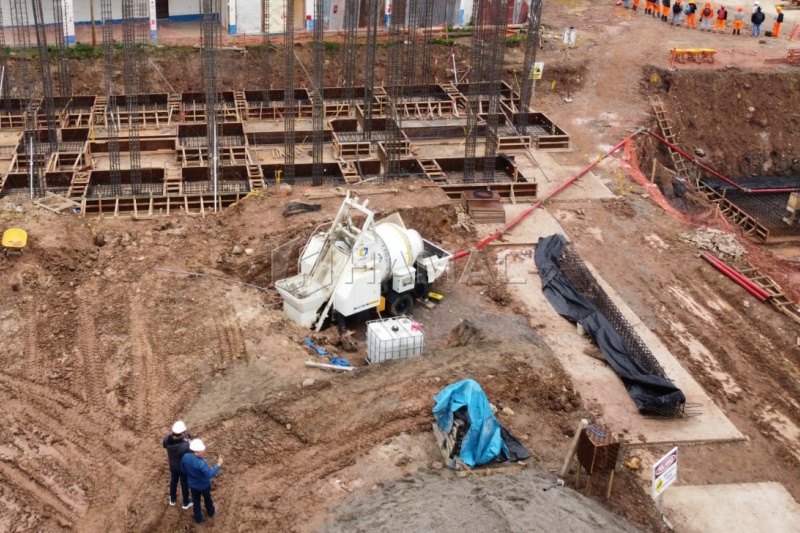
Concrete Pumping Plant

The advantages of concrete mixer with pump for sale in HAMAC

Home/ News/ Concrete Pumping Plant/ Article
Concrete Pumping Plant Editorial review by HAMAC

High construction efficiency. The mixing amount is more than five times that of the lift type concrete mixer, which can build 180 square meters of concrete with the thickness of 10 centimeters per hour. Compared with the traditional construction, the machine can save labor. In addition, the efficiency of continuous pumping is high.
High cost performance. The mixing drum is made of 8mm thick manganese steel plate, and the frame is welded with 6mm thick channel steel. Easily worn parts are treated by heat treatment, which can increase performance by up to 40%. Meanwhile, as a reliable manufacturer, we can give customers the best price.
Good mixing quality. HAMAC can provide you with a concrete mixer with pump with twin shaft concrete mixer except the one with drum type mixer. Twin shaft concrete mixing system makes mixing concrete more uniform, speed much faster. The mixing concrete quality can reach the standard of commercial concrete.
Commercial grade concrete mixer pump. It can convey large aggregate with the diameter of 40mm. Even the dry and hard concrete can be pumped. The equipment is convenient for connecting and disconnecting pipes.  

Usage of Concrete Mixer with Pump

It is suitable for conveying for large aggregate concrete, such as, foundation pilling, rural civil construction, township and new rural construction, mining tunnel, highway and railway tunnel construction, water conservancy and hydropower projects, geological disaster slope treatment, foundation irrigation and other concrete conveying projects with the characteristics of large amount of concrete pouring or narrow space.  

Need help applying this to your project?

Send your material type, target output and site conditions to HAMAC engineers. You will receive a practical equipment configuration and a clear quotation, normally within one working day.

Questions about this topic

How do I choose batching plant capacity?

Estimate the concrete volume per day, then divide by the effective working hours. Add 20 to 30 percent headroom for peak demand. A 35 m³/h plant suits small contractors; 50 to 75 m³/h suits commercial supply; 90 m³/h and above suits large projects.

Which mixer type should I choose for my concrete?

Twin-shaft compulsory mixers are the default for commercial concrete because of short mixing cycles and uniform output. Planetary mixers suit high-grade or special mixes, and drum mixers suit smaller, simpler operations.

How often should wear parts be replaced?

Mixer blades and liners are inspected weekly and normally replaced every 6 to 12 months depending on abrasive content. Belt scrapers, screen meshes and pump wear plates follow the same inspection rhythm.

Can the plant be upgraded later?

Yes. Modular batching plants allow additional silos, a larger mixer or an upgraded control system to be added later without replacing the whole structure.

HAMAC Machinery Editorial Team

Written and reviewed by engineers and sales specialists who configure concrete batching plants, crushers, mixers and pumps for projects in more than 180 countries. Content is based on factory testing data and field feedback from delivered equipment.

Keep reading

Related articles

All news

Turn this knowledge into a working plant

HAMAC engineers translate your output target, material and site layout into a concrete or aggregate production configuration.