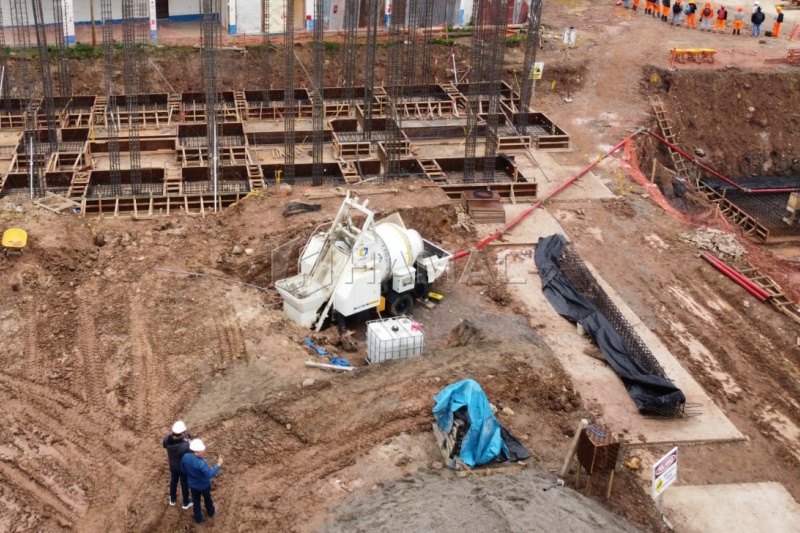
The stationary concrete batch plant adopts modular and easy splicing design, which makes all the components easy to transport and convenient to install. With characteristics of strong production capacity, stable work, good anti-interference, this type is mainly suitable for construction projects with large quantities, long duration and concentrated construction sites. Compared with the mobile type concrete batching plant without special foundation construction. Before the construction of the stationary concrete mixing plant, a firm foundation of concrete should be built, then we can fix the equipment on the foundation. The stationary concrete batching plant for sale in HAMAC Group includes skip hopper type, belt conveyor type, simple type with different sizes. Each type has its advantages, customers can select the appropriate one according to the specific situation of their projects.
Skip Hopper Stationary Concrete Mixing Plant
The skip hopper type is applied with a brake hoist and achieve the purpose of lifting the hopper through the pulley block and wire rope traction. In large and medium-sized mixing stations, double steel wire rope transmission is often adopted. And in small batching plants, most of them use the suspended single rope transmission or the single rope transmission method of the pulley guiding on the hopper. The advantages of hopper hoisting are small area, simple structure, suitable for narrow construction site.
Belt Conveyor Stationary Concrete Batching Plant
The belts of belt conveyor stationary concrete batching plant are connected in a closed loop and tensioned by a tensioning device. Driven by the motor, the conveyor belt is continuously operated by the friction between the conveyor belt and the driven roller, so as to achieve the purpose of transporting aggregate from the loading end to the unloading end. The biggest advantages of belt conveying distance, high efficiency and low failure rate. The tension device is used to make the conveyor belt have enough tension to ensure the friction between the conveyor belt and the driving drum to prevent the the conveyor belt from slipping. At the same time, it can adjust the influence caused by the change of the length of the conveyor belt. And the machine cover can play the role of dustproof and rainproof.
Modular Concrete Batching Plant
Modular mobile concrete batching plant is with special steel structure, which makes the whole device free of foundation and easy to disassemble to make it easy to move to other construction sites. It adopts the modular connection of the mixing main building and aggregate supply system. The aggregate supply system includes a frame, bin, weighing hopper, horizontal belt conveyor, inclined belt conveyor transition and aggregate bin. The whole set of equipment is easy to install and convenient to transport. The man-machine interface is easy to operate, the working performance is reliable and efficiency is high. In addition, the weighing of each proportioning material is performed by a separate weighing method to ensure high weighing accuracy. The modular concrete mixing station can realize the smooth conveying of aggregate, effectively avoid aggregate phenomenon and ensure the continuity of production. This kind of concrete plant is very applicable for customers who need to build many projects and the construction period is short. Check the pictures and parameters below and contact us for price list now.





 Exhibitions