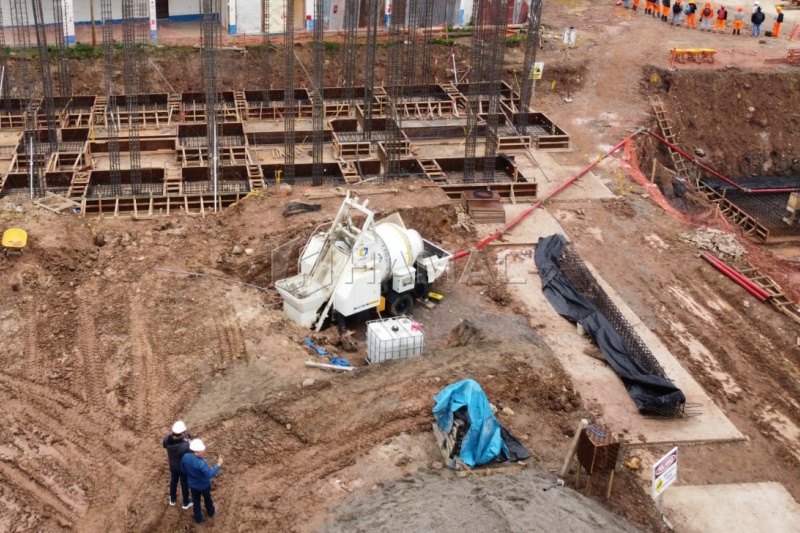
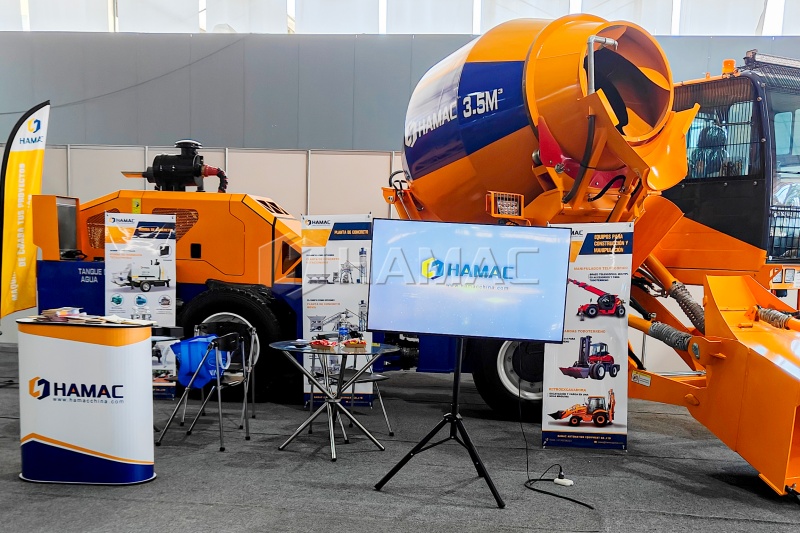
High quality production material. The steel we use is made by well-known domestic producers. The weight of the whole machine is heavier than that of the same model from other manufacturers.
The reduction gears is imported to ensure stable transmission and the auxiliary support are made of seamless steel tubes.
We use double horizontal shaft forced mixer with adjustable angle continuous spiral form, which is suitable for all kinds of concrete mixing and achieve homogeneity.
We have various belt delivery methods, such as, flat belt, trough belt, bucket belt to meet different needs of customers.
We have our own research and development team and they can design different types of equipment for customers. Meanwhile, we can also make special designs according to customers’ needs.
The Main Parts of Stationary Concrete Batching Plant
1.Concrete mixer. The part is composed of main mixer, main reducer, main motor, additional reducer, additional motor, manual oil pump, water pump, hydraulic station group, patch and blade, base frame, support leg, hopper, walking sleeve, guide rail, guardrail, ladder and so on.
2.Aggregate batching machine. It is mainly made up of batching machine, belt machine, steel frame, transmission motor, metering hopper, storage bin, etc…
3.Cement silo. The equipment is a kind of encapsulated container for storing materials, which is suitable for storage of water, cement, fly ash and other materials. The material level system is installed on the cabin, which can display the position and quantity of materials accurately. The broken copper setting can solve the solidification caused by the material being placed for too long.
4.Control system. It is the central nerve of the whole apparatus which has different functions and preparation according to the different requirements of users and sizes of the mixing station. We use excellent computer technology which can be operated both automatically and manually. In addition, it is easy to control and the operator can see the operation of each part on the computer.
5. Screw conveyor. The device can carry the material up and down when the screw shaft rotates. Cement conveying adopts full seal device, and the soft connection between the outlet and the metering hopper doesn’t affect the metering accuracy. The clearance between the spiral blade and the cylinder is small and the transmission efficiency is high.
6. Weighing system. We use high-precision load cells to ensure accurate metering and speed sensitive.
7.Dust collecting system. The mixing building is equipped with forced dust remover, which is used to remove the dust in the places where the dust is generated, such as mixer, powder measuring hopper and transition bin. The top of each powder tank is equipped with an independent self-discharging dust collector. The filter elements of the dust collector are imported, which makes the dust emission better than the national standard.
1. HAMAC is a comprehensive manufacturing enterprise specialized in the design, research and development, production and manufacturing, installation and debugging, the transformation and upgrading of old station relocation of engineering mixing machinery.
2.We always adhere to the independent research and development of electronic system and continuous product optimization, committed to customize the exclusive batching plants for customers.
3.We adhere to the business philosophy of delivering value, mutual benefit and win-win. We also adhere to independent innovation and continuously improve the user experience of products. Our company is always committed to providing professional customers with tailor-made, cost-effective and high-quality concrete machinery and technical services.
4.The stationary concrete batching equipment manufactured by us is reliable, efficient, energy saving and environmental protection.
Need help applying this to your project?
Send your material type, target output and site conditions to HAMAC engineers. You will receive a practical equipment configuration and a clear quotation, normally within one working day.
Questions about this topic
How do I choose batching plant capacity?
Estimate the concrete volume per day, then divide by the effective working hours. Add 20 to 30 percent headroom for peak demand. A 35 m³/h plant suits small contractors; 50 to 75 m³/h suits commercial supply; 90 m³/h and above suits large projects.
Which mixer type should I choose for my concrete?
Twin-shaft compulsory mixers are the default for commercial concrete because of short mixing cycles and uniform output. Planetary mixers suit high-grade or special mixes, and drum mixers suit smaller, simpler operations.
How often should wear parts be replaced?
Mixer blades and liners are inspected weekly and normally replaced every 6 to 12 months depending on abrasive content. Belt scrapers, screen meshes and pump wear plates follow the same inspection rhythm.
Can the plant be upgraded later?
Yes. Modular batching plants allow additional silos, a larger mixer or an upgraded control system to be added later without replacing the whole structure.
H
HAMAC Machinery Editorial Team
Written and reviewed by engineers and sales specialists who configure concrete batching plants, crushers, mixers and pumps for projects in more than 180 countries. Content is based on factory testing data and field feedback from delivered equipment.





 Exhibitions