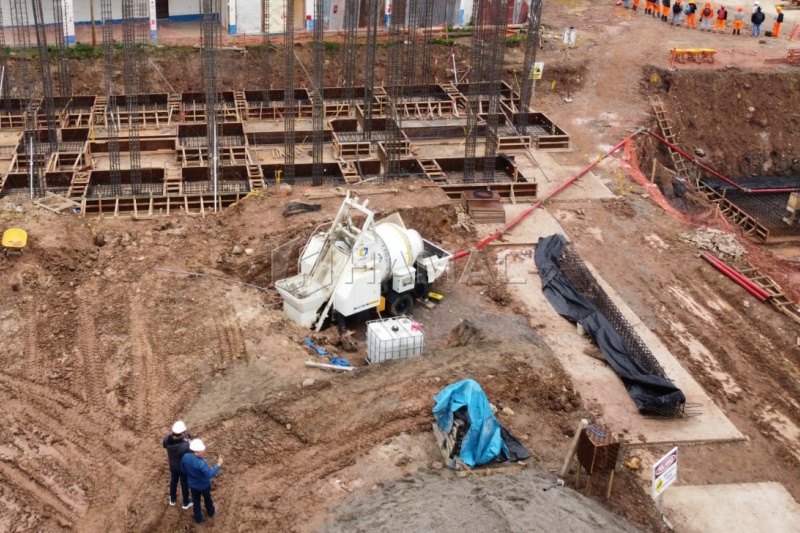
In recent years, the application of excavators in construction has become more and more extensive, and construction can be carried out for different projects. The safety of excavator buckets must be paid attention to during the construction process. Because the excavator has a wide range of uses, powerful functions, and relatively good digging power, we must pay great attention to it during the operation to avoid safety accidents. Here are some precautions for you, and I hope it will be helpful to you.
The use of an excavator can provide construction speed and reduce the labor burden of workers. A slight careless operation of the excavator bucket may cause accidents. Therefore, it is forbidden for anyone to go up and down the excavator to pass items during the operation. While performing maintenance. Do not adjust the engine hydraulic system and electronic control system at will. Care must be taken to choose a reasonable working surface. It is strictly forbidden to use a bucket to dig a hole.
During the unloading process, the excavator needs to wait for it to stop before unloading. When unloading, it cannot collide with any part of the loading and unloading truck, and the height of the bucket needs to be reduced. It is necessary to prohibit the bucket from passing over the top of the dump truck cab, which is most likely to cause accidents. The bucket cannot be used to break rocks and other solid objects during work. If you encounter larger rocks, you need to remove them before continuing. It is forbidden to use the bucket to break rocks above level 5, which will easily cause damage to the bucket.
During the parallel movement of the excavator, it is necessary to level the ground first, clear the obstacles in the passage in time, and prohibit the bucket from lifting the excavator, which is prone to accidents. After the bucket leaves the ground, the driver should not drive horizontally. The driver should concentrate on the operation to avoid other accidents.
Need help applying this to your project?
Send your material type, target output and site conditions to HAMAC engineers. You will receive a practical equipment configuration and a clear quotation, normally within one working day.
Questions about this topic
How do I choose batching plant capacity?
Estimate the concrete volume per day, then divide by the effective working hours. Add 20 to 30 percent headroom for peak demand. A 35 m³/h plant suits small contractors; 50 to 75 m³/h suits commercial supply; 90 m³/h and above suits large projects.
Which mixer type should I choose for my concrete?
Twin-shaft compulsory mixers are the default for commercial concrete because of short mixing cycles and uniform output. Planetary mixers suit high-grade or special mixes, and drum mixers suit smaller, simpler operations.
How often should wear parts be replaced?
Mixer blades and liners are inspected weekly and normally replaced every 6 to 12 months depending on abrasive content. Belt scrapers, screen meshes and pump wear plates follow the same inspection rhythm.
Can the plant be upgraded later?
Yes. Modular batching plants allow additional silos, a larger mixer or an upgraded control system to be added later without replacing the whole structure.
H
HAMAC Machinery Editorial Team
Written and reviewed by engineers and sales specialists who configure concrete batching plants, crushers, mixers and pumps for projects in more than 180 countries. Content is based on factory testing data and field feedback from delivered equipment.





 Exhibitions