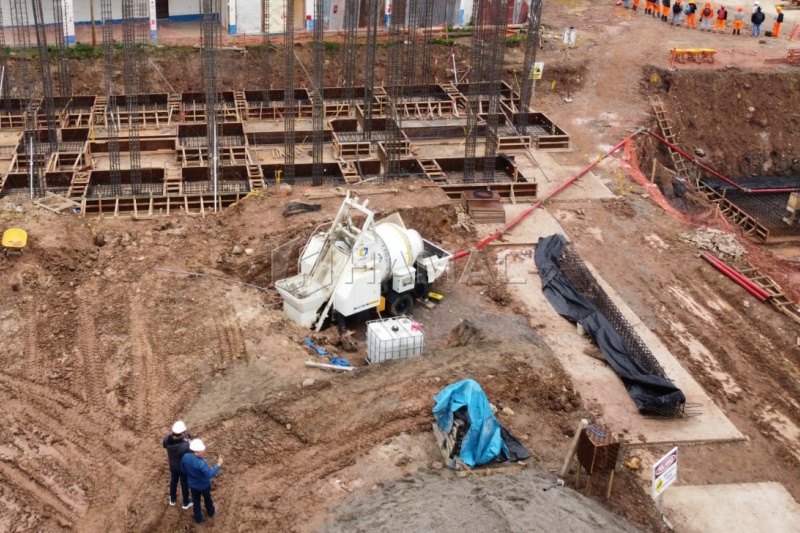
Concrete Pumping Plant

How to Choose a Suitable Concrete Pump

Home/ News/ Concrete Pumping Plant/ Article
Concrete Pumping Plant Editorial review by HAMAC

Technical Parameters

Customers can choose according the several main technical parameters of the equipment, such as, delivery capacity, outlet pressure, motor power and distribution valve form.

Motor Power

The motor power of a concrete pump is the precondition to determine the outlet pressure and the delivery volume. When the motor power is constant, the pressure increase will reduce the delivery volume. On the contrary, reducing the outlet pressure will make the delivery volume increase. The greater the value of the concrete of the actual outlet pressure of the concrete pump and the actual volume delivered per hour, the greater the capacity index and the greater the power of the motor, so as to achieve the purpose of large displacement and high lift.

Requirements for Concrete Pouring

The concrete project object, characteristics, the maximum throughput required, the maximum conveying distance, the concrete building plan, concrete pump form and conditions should be taken into comprehensive consideration.

The Type And Structure of The Building

The type and structure of building, construction requirements, site conditions and surrounding environment are also major factors to be considered. The main performance parameters of the concrete pump chosen should be consistent with the construction needs or slightly larger. If the capacity is too large, the utilization rate is low. And if the capacity is too small, it can’t meet the construction needs and accelerate the loss of concrete pump at the same time. Please contact our expert on pumping machine for a suitable concrete pump for your projects. We can assure you the save the cost for pumping machine with high quality concrete pumping machine.

Need help applying this to your project?

Send your material type, target output and site conditions to HAMAC engineers. You will receive a practical equipment configuration and a clear quotation, normally within one working day.

Questions about this topic

How do I choose batching plant capacity?

Estimate the concrete volume per day, then divide by the effective working hours. Add 20 to 30 percent headroom for peak demand. A 35 m³/h plant suits small contractors; 50 to 75 m³/h suits commercial supply; 90 m³/h and above suits large projects.

Which mixer type should I choose for my concrete?

Twin-shaft compulsory mixers are the default for commercial concrete because of short mixing cycles and uniform output. Planetary mixers suit high-grade or special mixes, and drum mixers suit smaller, simpler operations.

How often should wear parts be replaced?

Mixer blades and liners are inspected weekly and normally replaced every 6 to 12 months depending on abrasive content. Belt scrapers, screen meshes and pump wear plates follow the same inspection rhythm.

Can the plant be upgraded later?

Yes. Modular batching plants allow additional silos, a larger mixer or an upgraded control system to be added later without replacing the whole structure.

HAMAC Machinery Editorial Team

Written and reviewed by engineers and sales specialists who configure concrete batching plants, crushers, mixers and pumps for projects in more than 180 countries. Content is based on factory testing data and field feedback from delivered equipment.

Sorry,This is the first Page!
What is Concrete Mixer With Pump
Keep reading

Related articles

All news

Turn this knowledge into a working plant

HAMAC engineers translate your output target, material and site layout into a concrete or aggregate production configuration.