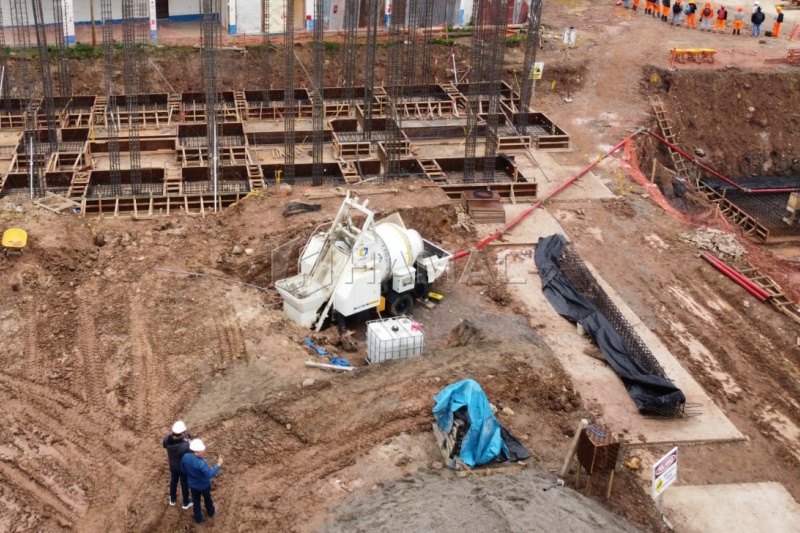
The excavator's earthmoving bucket not only undertakes the role of digging the ground, but also needs the help of the earthmoving bucket to crush some large rocks, so as to occupy an advantage in the metallurgical industry.
Can it be used in a fixed manner?
1. If you want to use the excavator earthmoving bucket, you need to use a fixed crusher, you need to open up a special site and install related supporting equipment, and the investment and installation costs are high. Not necessarily suitable.
2. Fixed use also needs to improve noise reduction and dust reduction measures, which will easily cause greater impact on the surrounding environment. Therefore, fixed use is generally not recommended. Of course, with the continuous upgrading and improvement of technology, more and more crushing equipment such as excavator earthmoving buckets are becoming more efficient. Due to the relatively high cost of renting and using mobile crushing stations, earthmoving buckets are temporarily not suitable for fixed use.
Configuration notes for crusher
Crusher throughput depends heavily on feed gradation and rock hardness. The same machine can lose 30 percent of its rated capacity when fed oversize or wet, sticky material. In practice, the delivered scope for this type of work usually includes:
- primary jaw crusher for coarse reduction of run-of-quarry rock
- secondary cone or impact crusher for shaping and size control
- vibrating screen with two or three decks and adjustable mesh
- belt conveyors with magnetic separator and metal detector
Site and operating conditions
Equipment working in the destination market has to deal with local material grading, power supply stability and the availability of skilled operators, all of which influence the final configuration more than the catalogue rating does. These points are reviewed during the technical clarification stage, because they change foundation design, electrical protection and the maintenance schedule.
What buyers should check before ordering
- match the feed opening to the largest lump size your quarry actually produces
- confirm the closed-side setting range needed for each finished aggregate size
- check whether the plant is mounted on a fixed foundation or a mobile chassis
- verify the wear part material for jaw plates and blow bars against your rock abrasiveness
- ask for the guaranteed throughput at the target product size, not the maximum figure
Key takeaways
- Base the selection on daily output and actual material, not on a model number.
- Confirm the quoted capacity matches your material and site conditions.
- Plan wear parts and a spare parts kit from the first year of operation.
HAMAC can review your requirement and propose a comparable configuration with a clear scope, schedule and support plan.





 Exhibitions