This article sets out how the market works in practice, which factors move price and lead time, and the questions a buyer should settle before comparing quotations.
Middle East: large projects and high specification
Gulf markets are driven by government programmes and very large developments. Buyers specify high output, high automation and often dual-source batching for redundancy. Heat, dust and humidity shape the technical requirement as much as the concrete volume does.
Payment and contract terms tend to be formal, with performance guarantees and liquidated damages. Suppliers who can provide documentation, test certificates and a credible local service arrangement have an advantage over those competing only on price.
Africa: growth with logistics constraints
African demand is broad, ranging from single machines for a contractor to complete plants for a new ready-mix business. The common constraint is not demand but logistics: port clearance, inland transport, power supply and the availability of skilled operators.
Equipment that is simple to install, tolerant of voltage fluctuation and supported by a stocked spare parts location performs better commercially than a more advanced machine that cannot be maintained locally.
Cost element
Usually quoted
Often overlooked
Equipment (FOB)
Yes
Optional items left out of scope
Sea freight
Sometimes
Container plan and packing
Import duty and tax
No
Tariff classification
Inland transport
No
Crane at destination
Installation
No
Foundation and power supply
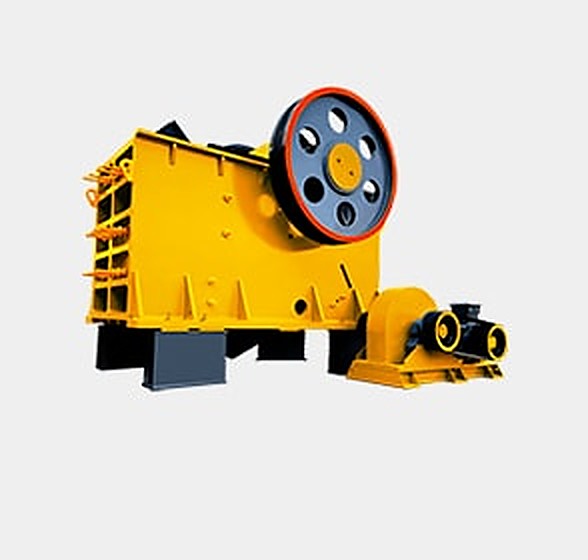
Jaw crusher used as the primary stage in a stone crushing plant — HAMAC equipment supplied to concrete and aggregate projects worldwide.
Southeast Asia: price sensitivity and fast payback
Southeast Asian markets combine rapid construction growth with strong price competition. Buyers typically want a fast return on investment and are willing to accept a simpler configuration if the machine produces reliably.
Local competition is significant, and imported equipment competes on configuration, delivery time and after-sales support rather than on price alone. Financing arrangements often decide the order as much as the machine specification.
Latin America: import cost and currency
Import duties, freight and currency volatility can add a large share to the landed cost of equipment in Latin America. Buyers therefore pay close attention to container loading efficiency and to the completeness of the shipment, because a missing component can be extremely expensive to air freight later.
Long-standing trade relationships and local representation matter in this region. A supplier with a local partner who can handle customs, installation and service has a clear advantage.
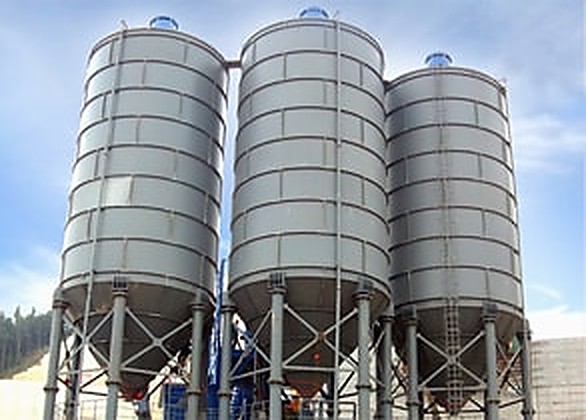
Welded cement silo with screw conveyor and pressure relief valve — HAMAC equipment supplied to concrete and aggregate projects worldwide.
Certification requirements by destination
European destinations require CE marking with a declaration of conformity, technical file and, for some machine types, involvement of a notified body. North America has different requirements, with local electrical and safety standards rather than the European framework.
Many other markets accept a combination of an ISO-based quality system, test reports and a certificate of origin, but the specific list must be confirmed with the importer before shipment. Discovering a missing certificate after the machine has arrived is expensive and slow to resolve.
Container loading and freight cost
A batching plant typically occupies several containers, and how the modules are packed decides whether an extra container is needed. Nested silos, knocked-down conveyor sections and carefully planned crate sizes reduce the volume without compromising protection.
Freight cost should be quoted with the loading plan, not as a separate estimate. The buyer needs to compare landed cost, and a supplier who can show a container plan and a packing list gives a buyer confidence that the shipment will arrive complete.
Import duties, taxes and customs documentation
Duty rates for construction machinery vary widely and depend on the tariff classification used. A machine classified as a complete plant can attract a different rate from the same machine classified as separate components, and the classification must be defensible.
Documents normally required include the commercial invoice, packing list, bill of lading, certificate of origin and, where applicable, a conformity certificate. Errors in these documents are the most common cause of clearance delay.
Where to go next
For the equipment side, see the HAMAC product range; for plant-level design and layout questions, see contact the export team. If the project is in Vietnam or a comparable market, the HAMAC team can provide reference installations and a configuration proposal against your daily output target.
If you are comparing configurations, share the requirement with HAMAC and ask for a like-for-like quotation with the included scope listed item by item.
Need help applying this to your project?
Send your material type, target output and site conditions to HAMAC engineers. You will receive a practical equipment configuration and a clear quotation, normally within one working day.
Questions about this topic
Do you supply CE documentation?
Yes, for applicable equipment. The specific requirements of the destination market should be confirmed before shipment.
Who handles customs clearance?
The importer or their agent normally handles clearance. HAMAC supplies the invoice, packing list, bill of lading and certificate of origin.
Can the voltage be adapted to our market?
Yes. Motors, control voltage and plug types are configured for the destination before production.
H
HAMAC Machinery Editorial Team
Written and reviewed by engineers and sales specialists who configure concrete batching plants, crushers, mixers and pumps for projects in more than 180 countries. Content is based on factory testing data and field feedback from delivered equipment.





 Company News

