Most import surprises come from items that were never discussed, not from items that were priced wrongly. This article lists those items in the order they usually appear.
Africa: growth with logistics constraints
African demand is broad, ranging from single machines for a contractor to complete plants for a new ready-mix business. The common constraint is not demand but logistics: port clearance, inland transport, power supply and the availability of skilled operators.
Equipment that is simple to install, tolerant of voltage fluctuation and supported by a stocked spare parts location performs better commercially than a more advanced machine that cannot be maintained locally.
Southeast Asia: price sensitivity and fast payback
Southeast Asian markets combine rapid construction growth with strong price competition. Buyers typically want a fast return on investment and are willing to accept a simpler configuration if the machine produces reliably.
Local competition is significant, and imported equipment competes on configuration, delivery time and after-sales support rather than on price alone. Financing arrangements often decide the order as much as the machine specification.
Cost element
Usually quoted
Often overlooked
Equipment (FOB)
Yes
Optional items left out of scope
Sea freight
Sometimes
Container plan and packing
Import duty and tax
No
Tariff classification
Inland transport
No
Crane at destination
Installation
No
Foundation and power supply
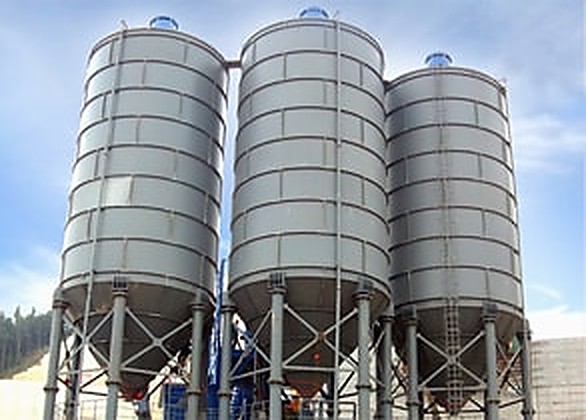
Welded cement silo with screw conveyor and pressure relief valve — HAMAC equipment supplied to concrete and aggregate projects worldwide.
Latin America: import cost and currency
Import duties, freight and currency volatility can add a large share to the landed cost of equipment in Latin America. Buyers therefore pay close attention to container loading efficiency and to the completeness of the shipment, because a missing component can be extremely expensive to air freight later.
Long-standing trade relationships and local representation matter in this region. A supplier with a local partner who can handle customs, installation and service has a clear advantage.
Certification requirements by destination
European destinations require CE marking with a declaration of conformity, technical file and, for some machine types, involvement of a notified body. North America has different requirements, with local electrical and safety standards rather than the European framework.
Many other markets accept a combination of an ISO-based quality system, test reports and a certificate of origin, but the specific list must be confirmed with the importer before shipment. Discovering a missing certificate after the machine has arrived is expensive and slow to resolve.
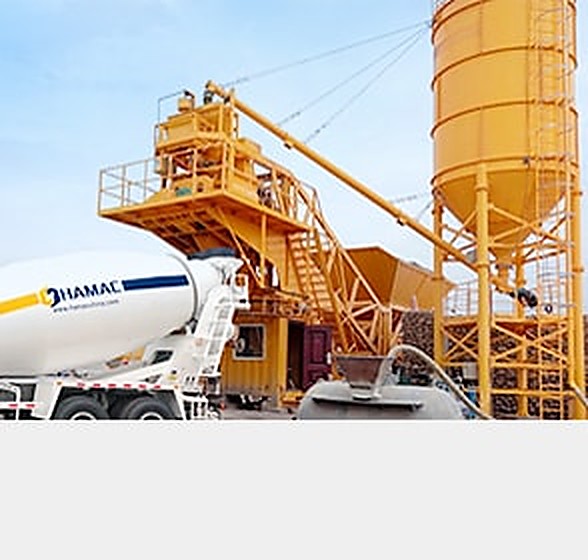
Mobile concrete batching plant mounted on a steel frame — HAMAC equipment supplied to concrete and aggregate projects worldwide.
Container loading and freight cost
A batching plant typically occupies several containers, and how the modules are packed decides whether an extra container is needed. Nested silos, knocked-down conveyor sections and carefully planned crate sizes reduce the volume without compromising protection.
Freight cost should be quoted with the loading plan, not as a separate estimate. The buyer needs to compare landed cost, and a supplier who can show a container plan and a packing list gives a buyer confidence that the shipment will arrive complete.
Import duties, taxes and customs documentation
Duty rates for construction machinery vary widely and depend on the tariff classification used. A machine classified as a complete plant can attract a different rate from the same machine classified as separate components, and the classification must be defensible.
Documents normally required include the commercial invoice, packing list, bill of lading, certificate of origin and, where applicable, a conformity certificate. Errors in these documents are the most common cause of clearance delay.
Lead time planning and project sequencing
Lead time is not only production time. It includes technical clarification, drawing approval, material procurement, fabrication, testing, packing, inland transport and sea freight. Buyers who plan only for the production period are frequently surprised by the total.
On a project with civil works, the foundation drawing should be issued early enough for the concrete to cure before the plant arrives. A plant that reaches site before its foundation is ready costs storage and stands idle.
Where to go next
For the equipment side, see the HAMAC product range; for plant-level design and layout questions, see contact the export team. If the project is in Ethiopia or a comparable market, the HAMAC team can provide reference installations and a configuration proposal against your daily output target.
HAMAC can prepare a layout drawing and a budgetary quotation against your daily output target, including the civils information your contractor will need.
Need help applying this to your project?
Send your material type, target output and site conditions to HAMAC engineers. You will receive a practical equipment configuration and a clear quotation, normally within one working day.
Questions about this topic
What payment terms are normal?
A deposit with the balance before shipment is standard. Terms can be discussed for repeat customers and project contracts.
How many containers does a batching plant need?
A 60 m3/h stationary plant typically needs three to five 40-foot containers depending on silo size and configuration.
What is the typical lead time?
Production is 20 to 45 working days depending on configuration, plus inland transport and sea freight. Total lead time is usually 45 to 75 days.
H
HAMAC Machinery Editorial Team
Written and reviewed by engineers and sales specialists who configure concrete batching plants, crushers, mixers and pumps for projects in more than 180 countries. Content is based on factory testing data and field feedback from delivered equipment.





 Company News

