




In this article
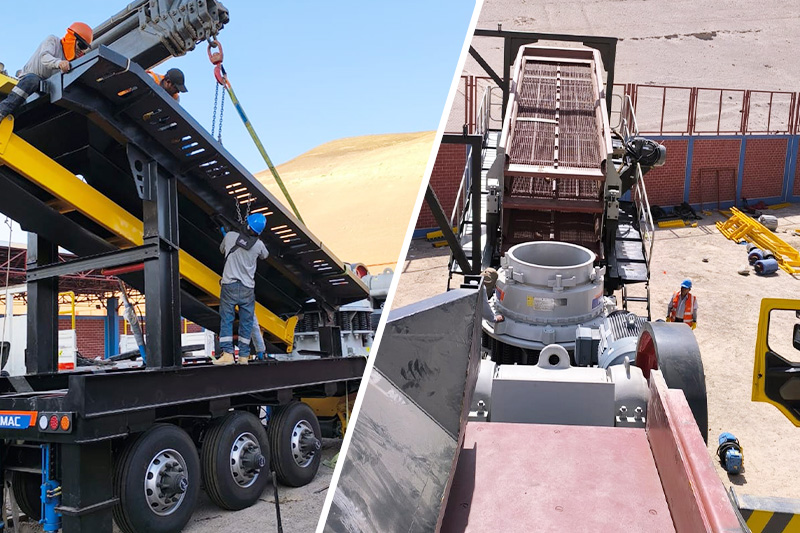
In 2026, a new mobile crushing and screening plant supplied by HAMAC arrived at a quarry near Arequipa, Peru, and has been assembled on site to start producing crushed stone for local building projects. The mobile unit was delivered in several transport modules and then re‑assembled by HAMAC engineers together with the client’s team, forming a compact production line that can move close to the rock face and supply high‑quality stone for concrete and masonry works in the Arequipa region. For the contractor, this solution reduces the need to haul raw rock over long distances and ensures a stable supply of building aggregate directly at the construction area.
The mobile crushing plant integrates feeding, primary crushing, secondary crushing and screening on a single chassis, functioning as a complete stone processing line for construction use. The system typically consists of a vibrating feeder that transfers material to a jaw crusher for primary breaking, followed by a cone or impact crusher for secondary reduction, and a multi‑deck vibrating screen to separate different aggregate sizes. Crushed stone fractions are discharged by belt conveyors into stockpiles that can be loaded into dump trucks and transported to concrete batching plants, block factories and building sites around Arequipa. By bringing the production line directly to the site, the client shortens installation time and starts stone production shortly after the equipment arrives.
At this Arequipa job site, the mobile plant is mainly used to produce graded stone for structural concrete, block making and general building works. The quarry rock is fed into the primary crusher, where large stones are reduced to smaller sizes suitable for further processing. The screening unit separates the material into several size ranges, such as base course, sub‑base and fine aggregate for concrete, so local builders can choose the right stone fraction for foundations, columns, beams and slabs. Producing these stone sizes on site improves quality control and reduces dependence on outside aggregate suppliers.
The mobility of the plant is especially important in the mountainous terrain around Arequipa. The equipment can be repositioned as the quarry face advances or moved to different borrow pits, so stone is always produced close to where it will be used. Compared with a traditional stationary crushing installation that requires heavy civil foundations and long fixed conveyors, the mobile crusher plant can be set up more quickly and relocated without major civil works, which suits the dynamic and scattered nature of building projects in this region. Thanks to this flexibility, the contractor can respond faster to new construction sites while keeping investment and operating costs under control.
HAMAC provided the complete solution for this Arequipa project, including layout drawings, installation guidance and on‑site commissioning support. After mechanical and electrical tests confirmed that the mobile crushing and screening plant achieved the required capacity and stone gradation, the client started regular operation, supplying crushed stone to housing developments, commercial buildings and infrastructure works in and around Arequipa. With this mobile crushing plant, HAMAC continues to support Peruvian contractors with reliable equipment for producing construction aggregate directly at the jobsite.
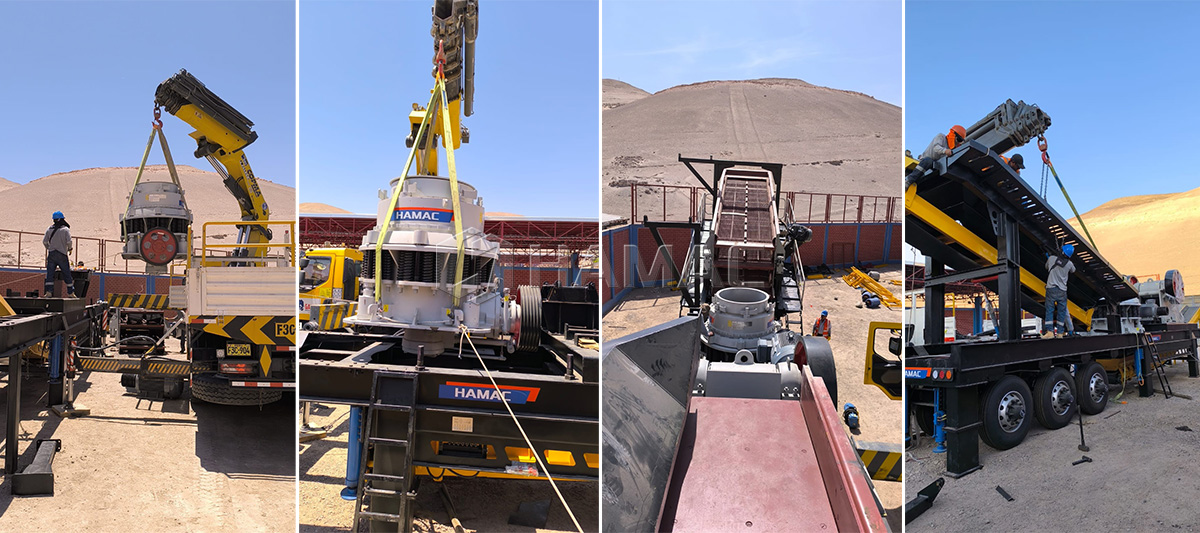
Crushed stone production for building construction in Arequipa
Need help applying this to your project?
Send your material type, target output and site conditions to HAMAC engineers. You will receive a practical equipment configuration and a clear quotation, normally within one working day.
Questions about this topic
How do I compare quotations from different suppliers fairly?
Compare the same scope: mixer type and brand of core components, batching accuracy, control system, silo capacity, steel plate thickness and the spare parts list. A lower price often reflects a smaller mixer or thinner steel structure.
What payment terms does HAMAC normally accept?
The standard arrangement is a deposit with the balance settled before shipment. Terms can be discussed for repeat customers and project-based contracts.
Do you provide CE or other certification documentation?
Certification requirements vary by destination. HAMAC can supply CE documentation for applicable equipment and prepare the shipping and customs paperwork required by the importing country.
How do freight and container loading work?
Plants are packed into standard containers with reinforced frames. HAMAC confirms the container plan before booking, which keeps freight costs predictable and reduces the risk of damage in transit.
Keep reading
All news
Related articles
 Company News
HAMAC Expands Concrete Batching Plant Assembly Capacity
HAMAC Expands Concrete Batching Plant Assembly Capacity: how the process works at HAMAC, what is checked before shipment and what buyers can
Read more Exhibitions
HAMAC Highlights Concrete and Aggregate Equipment Solutions for Construction Projects
HAMAC Highlights Concrete and Aggregate Equipment Solutions for Construction Projects Equipment portfolio covers concrete production, mixing
Read more Company News
How HAMAC Controls Quality From Steel Cutting to Final Load Test
How HAMAC Controls Quality From Steel Cutting to Final Load Test: how the process works at HAMAC, what is checked before shipment and what bu
Read more