




In this article
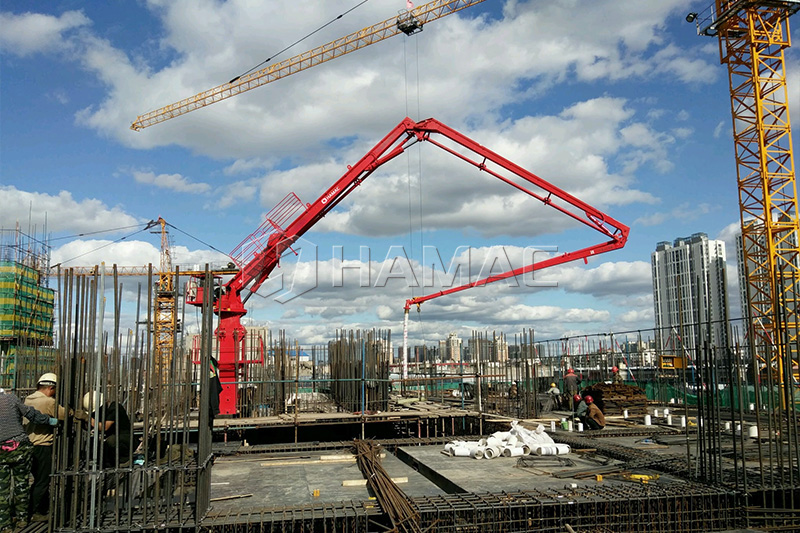
In 2026, a 32 m self-climbing concrete placing boom supplied by HAMAC was successfully put into operation on a high-rise building project in the Philippines, working inside the slab and elevator shaft to place concrete for upper floors.
Installed on the inner structure of the building, the placing boom climbs floor by floor as construction progresses, ensuring efficient and safe concrete distribution at heights where truck pumps cannot reach directly.
The machine is fixed in the elevator shaft and equipped with a hydraulic self-climbing mechanism, allowing the self-climbing concrete placing boom to rise automatically with the increase of floor levels.
Concrete is pumped from a stationary concrete pump at ground level and then distributed to different positions on the slab through the 32 m boom, which covers a large placing radius with 0-360° rotation and multiple articulating arms.
Thanks to this configuration, the contractor can pour slabs, columns, beams and shear walls on upper floors without heavy manual pipe systems and frequent pipe relocation.
The pipeline inlet under the placing boom connects directly to the pipeline of the stationary pump, so concrete can be delivered continuously to the boom and placed accurately on the slab formwork.
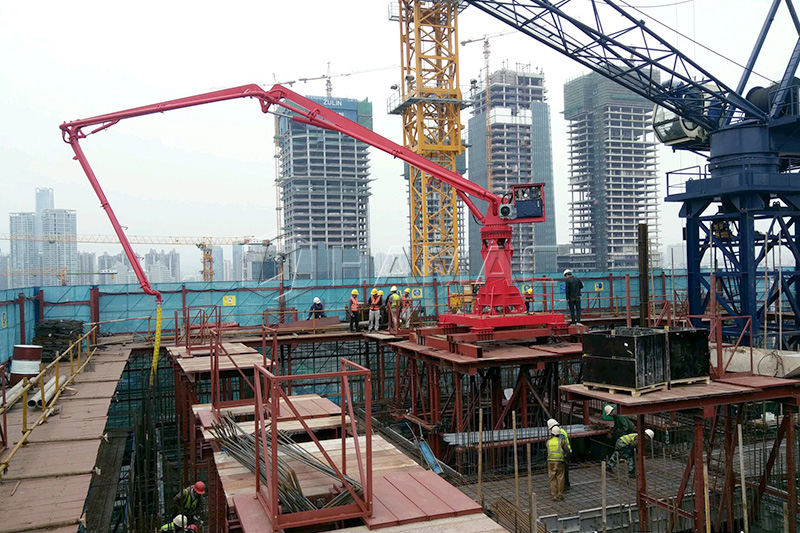
32 m self-climbing concrete placing boom
With a maximum placing radius of 32 m and Ø125×6 mm delivery pipes, the boom can easily cover the whole floor area of the high-rise project in the Philippines.
During the project, the self-climbing boom has helped the contractor improve productivity and reduce labour intensity, especially in the congested core zone of the building.
Workers can operate the boom via panel and wireless remote control, placing concrete exactly where needed while maintaining safety distances from the formwork edge and lifting equipment.
HAMAC provided installation guidance, climbing procedure instructions and on-site training for the Philippine team, ensuring safe climbing operations and correct connection with the stationary pump.
With the support of HAMAC’s technical team, the 32 m self-climbing placing boom has become a key equipment for the high-rise slab construction and has demonstrated reliable performance throughout the project.
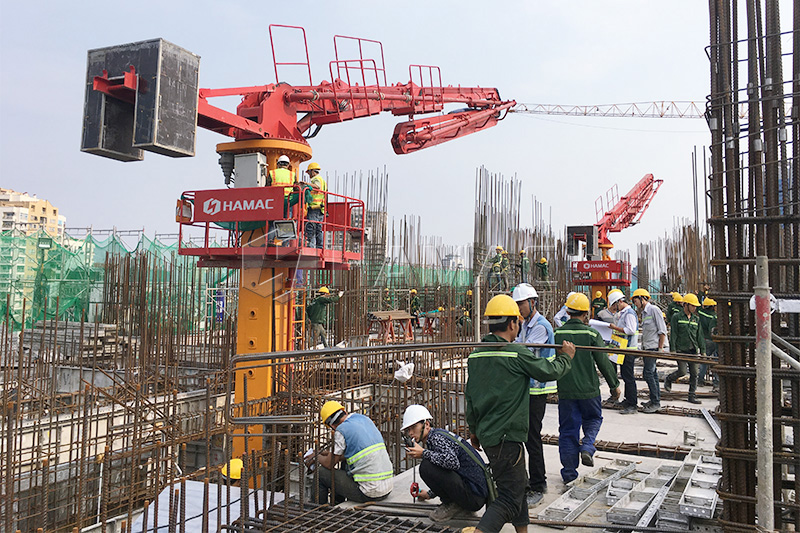
32 m self-climbing concrete placing boom
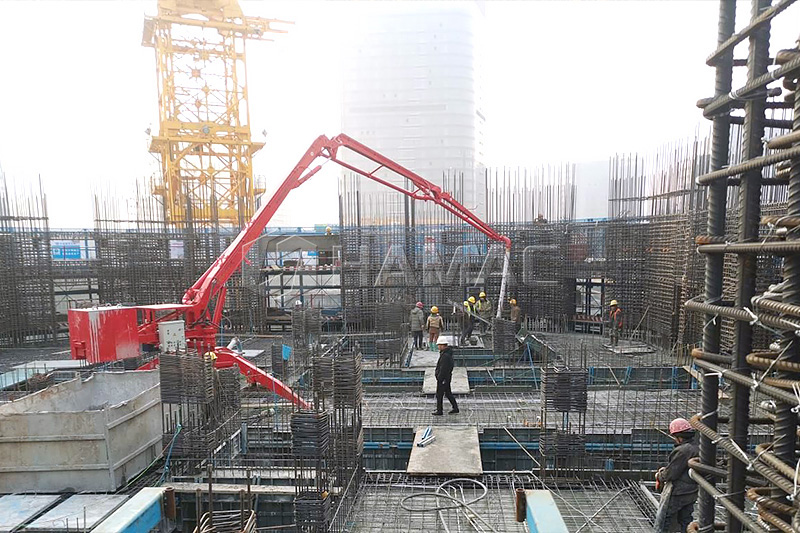
32 m self-climbing concrete placing boom
This successful application of the 32 m self-climbing concrete placing boom in the Philippines once again proves HAMAC’s ability to deliver advanced concrete placing solutions that work together with stationary pumps on complex high-rise projects.
As more HAMAC placing booms are used on building cores in Southeast Asia, we will continue to support local contractors with efficient equipment and considerate service.
Need help applying this to your project?
Send your material type, target output and site conditions to HAMAC engineers. You will receive a practical equipment configuration and a clear quotation, normally within one working day.
Questions about this topic
How do I compare quotations from different suppliers fairly?
Compare the same scope: mixer type and brand of core components, batching accuracy, control system, silo capacity, steel plate thickness and the spare parts list. A lower price often reflects a smaller mixer or thinner steel structure.
What payment terms does HAMAC normally accept?
The standard arrangement is a deposit with the balance settled before shipment. Terms can be discussed for repeat customers and project-based contracts.
Do you provide CE or other certification documentation?
Certification requirements vary by destination. HAMAC can supply CE documentation for applicable equipment and prepare the shipping and customs paperwork required by the importing country.
How do freight and container loading work?
Plants are packed into standard containers with reinforced frames. HAMAC confirms the container plan before booking, which keeps freight costs predictable and reduces the risk of damage in transit.
Keep reading
All news
Related articles
 Company News
HAMAC Expands Concrete Batching Plant Assembly Capacity
HAMAC Expands Concrete Batching Plant Assembly Capacity: how the process works at HAMAC, what is checked before shipment and what buyers can
Read more Exhibitions
HAMAC Highlights Concrete and Aggregate Equipment Solutions for Construction Projects
HAMAC Highlights Concrete and Aggregate Equipment Solutions for Construction Projects Equipment portfolio covers concrete production, mixing
Read more Company News
How HAMAC Controls Quality From Steel Cutting to Final Load Test
How HAMAC Controls Quality From Steel Cutting to Final Load Test: how the process works at HAMAC, what is checked before shipment and what bu
Read more