For a concrete batching plant handling a contractor building a new town bypass, the practical questions are rarely about a single specification figure. This article works through crushed granite and the site conditions that change the answer. The reference case is a 35 m3/h operation in Tanzania.
The operating context matters as much as the machine specification. In Tanzania, a contractor building a new town bypass works in a tropical climate with a distinct rainy season. A plant specified for this market normally includes covered aggregate bays and a plant layout that keeps the truck lane usable in wet weather, and the layout is planned around crushed granite rather than a generic aggregate.
Winter and hot-climate operation
In cold weather the constraint is heat loss rather than machine capability. Heated water, insulated pipes and a heated aggregate compartment allow production to continue, but mixing time must be extended and the water temperature kept below the value at which cement flashes. Fresh concrete must be protected between the plant and the formwork.
In hot climates the risks are rapid slump loss, high water demand and overheating of hydraulic systems. Chilled water or ice, shaded aggregate stockpiles and a mixing sequence that adds water at the end of the cycle all help. Control cabins need forced ventilation or air conditioning to protect both the operator and the electronics.
Upgrading an existing plant
Most plants can gain output without replacement. Adding a second cement silo removes the waiting time between cement deliveries, enlarging the aggregate bins reduces loader cycles, and upgrading the control system shortens the batching sequence. A larger mixer is the most direct route but requires checking the structure and the discharge height.
Before any upgrade, measure the actual cycle time of the existing plant over a full shift. The result usually shows where the bottleneck is: charging, mixing, discharge or truck movement. Investment should follow that measurement rather than a general assumption that more equipment means more output.
Twin shaft compulsory concrete mixer used in batching plants — HAMAC equipment supplied to concrete and aggregate projects worldwide.
What drives the purchase price
Two quotations for the same nominal capacity can differ by 30 percent or more. The difference usually sits in steel plate thickness, mixer gearbox and liners, load cell brand, control system, silo capacity and the scope of the delivery. A quotation that excludes silos, screw conveyors or the control cabin is not comparable with one that includes them.
The more useful comparison is cost per cubic metre over the life of the plant. A heavier structure with better wear parts costs more at the start and less every year afterwards, because it needs fewer repairs and holds calibration longer.
Common faults and their causes
Weight errors usually trace back to a drifting load cell, a gate that does not close fully or material stuck on the weighing frame. Slow discharge is normally a worn gate seal or a discharge height that forces the truck to reposition. Mixer noise points to bearing wear or a loose blade arm.
Electrical faults are frequently environmental: moisture in a junction box, dust on a contactor or a voltage drop on a long supply cable. A plant installed with a proper earthing system and a stabilized supply suffers far fewer of these interruptions.
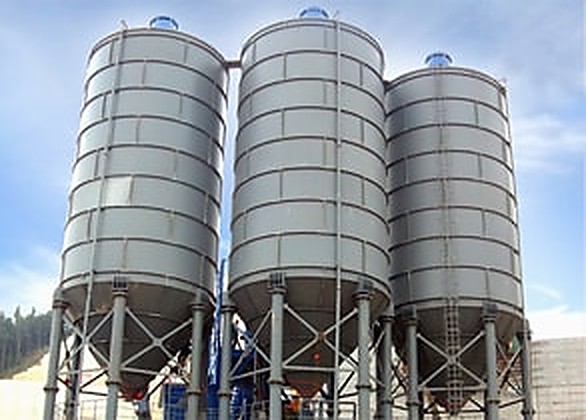
Welded cement silo with screw conveyor and pressure relief valve — HAMAC equipment supplied to concrete and aggregate projects worldwide.
Dry mix mortar plants are a different design
A dry mix mortar plant shares the silo and weighing concept with a concrete plant but not the process. Sand must be dried and screened before batching, and the mixer is a paddle or plough type designed for powder blends rather than wet concrete. Adding water on site is done by the user, not by the plant.
The practical consequence is that a concrete batching plant cannot be converted into a mortar plant by changing the mixer alone. Drying capacity, dust collection and packing lines are the parts that decide whether the plant can produce a saleable bagged product.
Selecting a supplier
Ask for the steel plate thickness of the batching machine and the mixer shell, the brand and model of the gearbox and load cells, and the control system architecture. These four items explain most of the price difference between suppliers and most of the reliability difference in service.
Ask also for reference plants in a similar climate and duty. A plant running well in a temperate climate with dry aggregates may need different sealing, painting and electrical protection in a coastal or desert environment. References from comparable conditions are worth more than a specification sheet.
Matching plant capacity to real daily demand
Capacity is usually quoted as theoretical output per hour, measured with a fully charged batching machine and a continuous supply of aggregates. Real output is lower because batching, charging, mixing and discharge overlap with truck changes and quality checks. A reliable planning figure is 75 to 85 percent of the rated value for a well-run plant.
Start from the concrete volume required on the busiest day rather than the average day. Divide that volume by the productive hours in a shift, then add headroom for peaks. A plant sized exactly to average demand will queue trucks whenever a large pour is scheduled.
Rated output
Typical realistic output
Usual application
HZS25 - 35 m3/h
20 - 28 m3/h
Small contractor, single site
HZS50 - 60 m3/h
40 - 50 m3/h
Commercial supply, small town
HZS75 - 90 m3/h
60 - 75 m3/h
Ready-mix supplier, mid-size city
HZS120 - 180 m3/h
95 - 145 m3/h
High-volume ready-mix, major projects
Where to go next
For the equipment side, see concrete batching plants; for plant-level design and layout questions, see concrete production solutions. If the project is in Tanzania or a comparable market, the HAMAC team can provide reference installations and a configuration proposal against your daily output target.
Send the daily volume, mix types and site conditions to HAMAC engineers and you will receive a configuration and a quotation, normally within one working day.
Need help applying this to your project?
Send your material type, target output and site conditions to HAMAC engineers. You will receive a practical equipment configuration and a clear quotation, normally within one working day.
Questions about this topic
How much space does a batching plant need?
A 60 m3/h stationary plant typically needs about 1,200 to 1,800 square metres including aggregate storage, truck lanes and the control cabin. Mobile plants need less because storage is integrated.
How accurate is batching on a standard plant?
Cement and water are normally within plus or minus one percent and aggregates within plus or minus two percent, provided the load cells are calibrated with test weights and the discharge gates close cleanly.
How long does installation take?
A 60 to 90 m3/h stationary plant normally takes 10 to 20 days with a competent local team, excluding foundation curing. Mobile plants can be producing within three to five days.
H
HAMAC Machinery Editorial Team
Written and reviewed by engineers and sales specialists who configure concrete batching plants, crushers, mixers and pumps for projects in more than 180 countries. Content is based on factory testing data and field feedback from delivered equipment.






 Company News
