A plant that runs at its rated output for years is the result of a few correct decisions at the start. This article explains a crushing plant and the choices that matter most for a growing ready-mix start-up using crushed granite. The reference case is a 56 t/h operation in Ghana.
The operating context matters as much as the machine specification. In Ghana, a growing ready-mix start-up works in a tropical climate with high humidity and heavy seasonal rain. A plant specified for this market normally includes covered storage, sealed enclosures and drainage around the foundation, and the layout is planned around crushed granite rather than a generic aggregate.
Manufactured sand production
A vertical shaft impact crusher produces manufactured sand with a cubical shape and a controlled grading. The main challenge is the excess of fines below 75 microns, which increases water demand in concrete. A wet classification or air classification system removes part of that filler and stabilises the grading.
Manufactured sand works well in concrete when the grading is consistent and the fines content is controlled. Variability, not the sand itself, is what causes problems at the batching plant.
Product gradation and specification
Concrete aggregate specifications limit the proportion of flaky and elongated particles, control the fines content and require a grading within defined envelopes. A plant that produces a good average grading but swings outside the envelope between samples will still be rejected by a demanding customer.
Consistency comes from stable feed, constant setting and a screen that is not overloaded. Blending two stockpiles is a practical way to hold a specification when the deposit varies, but it requires separate stockpiles and a controlled reclaim method.
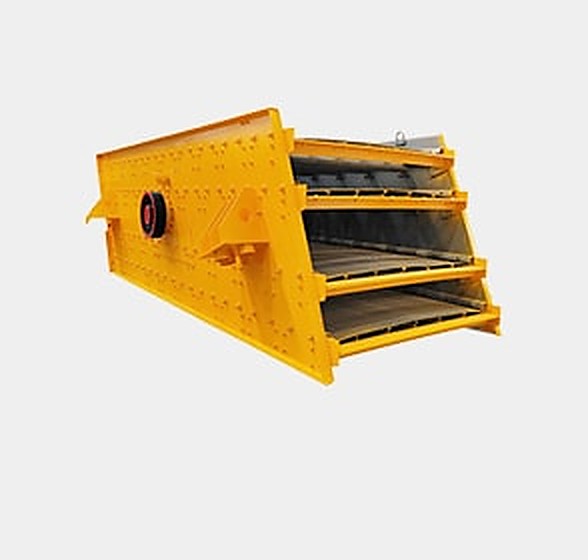
Vibrating screen sizing aggregate in a crushing plant — HAMAC equipment supplied to concrete and aggregate projects worldwide.
Capacity calculation for a new plant
Calculate backwards from the product. Start with the tonnes of each product required per shift, add the oversize that will be returned, and apply a screen efficiency factor. That gives the crusher throughput. Then check that the primary crusher can accept the largest feed lump at the required rate.
Motor power is a poor indicator of capacity. Two crushers with the same power can differ by 40 percent in throughput depending on cavity, speed and feed characteristics. Supplier references on similar material are the most reliable guide.
Operating a plant in a remote location
Remote sites punish weak logistics. A plant that needs a specialist part from overseas can be idle for weeks. Standardising on a small number of crusher models, keeping a full set of wear parts on site and training local staff to carry out routine maintenance are what keep production running.
Power supply is the other constraint. Voltage fluctuation damages motors and control systems, so a stabilizer or a properly sized generator is part of the plant design rather than an afterthought.
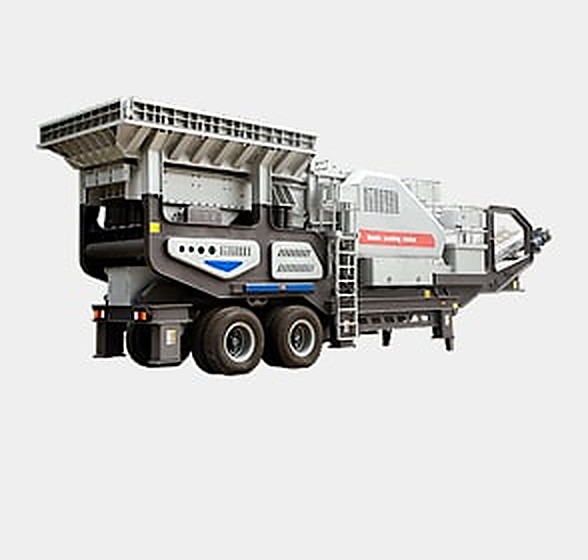
Mobile crushing and screening plant working at a quarry face — HAMAC equipment supplied to concrete and aggregate projects worldwide.
Recycling construction and demolition waste
Recycled concrete is abrasive and contains reinforcement, which changes the plant design. A magnetic separator over the discharge conveyor removes steel, and an impact crusher tolerates the mixed feed better than a cone. Dust and noise control are more demanding because recycling sites are often close to urban areas.
The product is usually used as sub-base or low-grade aggregate. Producing a higher-grade recycled aggregate requires tighter screening and, in many markets, additional testing to satisfy specification.
Defining the crushing duty before choosing equipment
The starting point is the material, not the machine. Rock type, blast size, moisture, clay content and the required product sizes decide the crusher type, the number of stages and the screen configuration. A plant designed for hard abrasive granite behaves very differently on soft limestone.
Throughput should be stated as finished product per hour, not feed per hour. A 200 t/h feed with a 30 percent reduction to fines and oversize produces considerably less saleable aggregate, and the difference decides whether the plant meets its contract.
Material
Abrasion
Typical primary
Typical secondary
Granite, basalt
High
Jaw crusher
Cone crusher
Limestone
Low to medium
Jaw or impact crusher
Impact crusher
River gravel
Medium
Jaw crusher
Cone crusher
Construction waste
Medium
Jaw crusher
Impact crusher
Jaw crusher as the primary stage
A jaw crusher reduces large feed to a size a secondary crusher can accept. Its advantages are a large feed opening, tolerance of clay and slabby rock, and simple maintenance. The trade-off is a flaky product shape and a capacity that drops sharply when the feed is wet and sticky.
The closed side setting controls the product size but also the capacity. Reducing the setting to produce a finer product increases the number of passes and the wear on the plates. For most quarry plants the primary setting is chosen to feed the secondary stage efficiently rather than to make a saleable product directly.
Where to go next
For the equipment side, see crushing and screening plants; for plant-level design and layout questions, see aggregate production solutions. If the project is in Ghana or a comparable market, the HAMAC team can provide reference installations and a configuration proposal against your daily output target.
Send the daily volume, mix types and site conditions to HAMAC engineers and you will receive a configuration and a quotation, normally within one working day.
Need help applying this to your project?
Send your material type, target output and site conditions to HAMAC engineers. You will receive a practical equipment configuration and a clear quotation, normally within one working day.
Questions about this topic
What screen angle should I use?
Most inclined screens run at 18 to 22 degrees. Steeper angles increase throughput but reduce efficiency; shallower angles improve screening at the cost of capacity.
Jaw or impact crusher for limestone?
A jaw crusher is more tolerant of large feed and abrasive material; an impact crusher gives a better shape and a higher fines content. For concrete aggregate, an impact crusher is often preferred in limestone.
How much dust does a crushing plant produce?
Dust depends on the rock and the number of transfer points. Enclosing transfers and using water sprays or a bag filter at the crusher and screen controls most visible emissions.
H
HAMAC Machinery Editorial Team
Written and reviewed by engineers and sales specialists who configure concrete batching plants, crushers, mixers and pumps for projects in more than 180 countries. Content is based on factory testing data and field feedback from delivered equipment.





 Company News

