




In this article
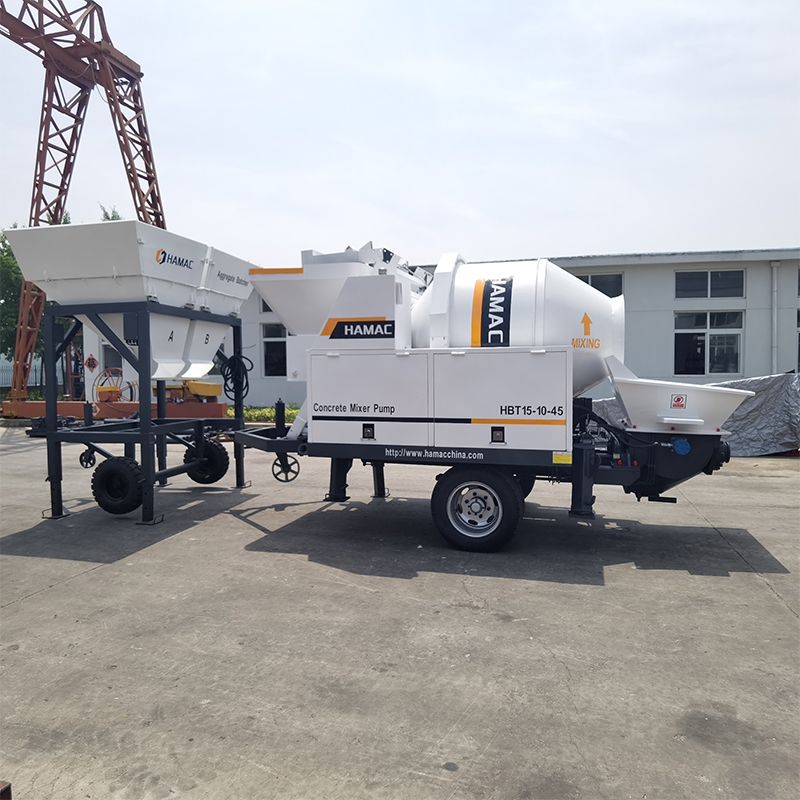
For many contractors, both DHBT15 and DHBT30 concrete mixer pumps look similar at first glance: they are diesel powered, combine a drum mixer and a trailer concrete pump on a compact frame, and are used to mix and pump concrete on the same machine. However, their capacity, pumping distance and ideal project types are not the same. Choosing the right model directly affects the efficiency of your concrete works and your total investment cost. This article summarizes the key differences between DHBT15 and DHBT30 and gives practical suggestions on how to select the most suitable model.
1. Basic concept: what do DHBT15 and DHBT30 mean?
The "15" and "30" in DHBT15 and DHBT30 refer to the approximate theoretical pumping capacity level and model series, not only to the mixer size. DHBT15 is usually configured with a JZM450 drum mixer and a pumping system capable of up to about 40 m³/h in theory, but in actual small projects it normally works around 15–25 m³/h. DHBT30 belongs to a higher output class with a stronger pump and larger hydraulic system, designed to handle more continuous concrete flow and longer pumping distances. In simple terms, DHBT15 is a small and economical mixer pump, while DHBT30 is a more powerful mixer pump for bigger and more demanding jobs.
2. Main differences in capacity and pumping distance
In practical use, the most important difference between DHBT15 and DHBT30 is the stable output you can expect on site. DHBT15 is suitable when your daily concrete volume is generally within 20–25 m³ and when there are frequent movements between small jobs. DHBT30 is recommended when your daily concrete demand often reaches 30–50 m³ or more on a single site, or when you need higher pumping height and longer distance for multi‑storey buildings or infrastructure. If you choose DHBT15 for a large volume project, the pump will have to run at a high load for long periods, which can reduce efficiency and increase wear.
3. Typical projects for DHBT15
The DHBT15 concrete mixer pump is ideal for rural housing projects, township buildings, small workshops, farm buildings and many repair and maintenance jobs. These projects often have limited access, no stable electricity, and small to medium concrete volume with frequent moves from one location to another. DHBT15 can be towed easily, set up quickly, and mix and pump the required concrete for foundations, columns, beams and slabs without bringing in a separate mixer and pump. For contractors who focus on scattered small projects, DHBT15 offers a good balance between cost and flexibility.
4. Typical projects for DHBT30
The DHBT30 concrete mixer pump is better for medium-sized building projects, small commercial complexes, higher warehouses, small bridges and larger retaining walls. On these jobs, concrete volume per day is higher and the pumping height or distance is more demanding than in simple rural housing. DHBT30 has a stronger pump unit and a more powerful hydraulic system, so it can sustain higher output with more stable pressure. If your company handles multi‑storey buildings up to several floors or continuous pours for small bridges and ramps, DHBT30 can complete the work more efficiently than DHBT15.
5. Site conditions: access, power and mobility
When deciding between DHBT15 and DHBT30, it is important to look at your typical site conditions. If most of your projects are in very narrow village streets, steep mountain roads or remote areas where moving a heavier unit is difficult, DHBT15 may be easier to transport and position. If your sites have better access and you often stay longer on the same project, DHBT30’s higher output will help you finish the job faster. Both models are diesel powered and do not need grid electricity, but DHBT30 usually consumes more fuel because of its higher capacity.
6. Budget, return on investment and future growth
DHBT15 has a lower purchase price and is easier to start with for small contractors. If your current projects are mainly small houses and repair jobs, DHBT15 may already cover 80–90% of your needs, giving you a faster payback period. However, if you plan to move into bigger projects within one or two years—such as small commercial buildings, higher warehouses or more demanding infrastructure—investing in a DHBT30 from the beginning may be more strategic. A larger mixer pump can help you win bigger contracts and grow your business.
7. Simple selection checklist
As a simple rule of thumb, you can use the following checklist: if your daily concrete volume is usually below 25 m³, the maximum pumping height is within about 30–40 m, and most sites are in rural or township areas with narrow access, DHBT15 is generally the better choice. If your daily volume is often above 30 m³, you need to pump higher or farther, and you are working on more concentrated construction sites, DHBT30 will be more suitable. When in doubt, you can start by listing your last 10 typical projects and compare their concrete volume, height and distance requirements against the capabilities of both models.
Need help applying this to your project?
Send your material type, target output and site conditions to HAMAC engineers. You will receive a practical equipment configuration and a clear quotation, normally within one working day.
Questions about this topic
How do I choose batching plant capacity?
Estimate the concrete volume per day, then divide by the effective working hours. Add 20 to 30 percent headroom for peak demand. A 35 m³/h plant suits small contractors; 50 to 75 m³/h suits commercial supply; 90 m³/h and above suits large projects.
Which mixer type should I choose for my concrete?
Twin-shaft compulsory mixers are the default for commercial concrete because of short mixing cycles and uniform output. Planetary mixers suit high-grade or special mixes, and drum mixers suit smaller, simpler operations.
How often should wear parts be replaced?
Mixer blades and liners are inspected weekly and normally replaced every 6 to 12 months depending on abrasive content. Belt scrapers, screen meshes and pump wear plates follow the same inspection rhythm.
Can the plant be upgraded later?
Yes. Modular batching plants allow additional silos, a larger mixer or an upgraded control system to be added later without replacing the whole structure.
Sorry,This is the last Page!
Keep reading
All news
Related articles
 Exhibitions
HAMAC Highlights Concrete and Aggregate Equipment Solutions for Construction Projects
HAMAC Highlights Concrete and Aggregate Equipment Solutions for Construction Projects Equipment portfolio covers concrete production, mixing
Read more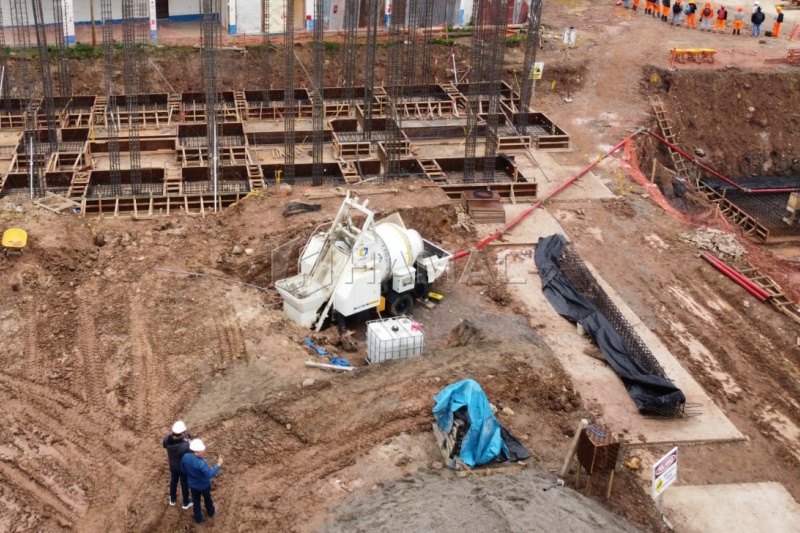 Trade News
HAMAC Trailer Concrete Mixer Pump for Foundation Construction in Peru
Explore how a HAMAC trailer concrete mixer pump supports foundation construction in Peru. See how integrated concrete mixing, pumping and pip
Read more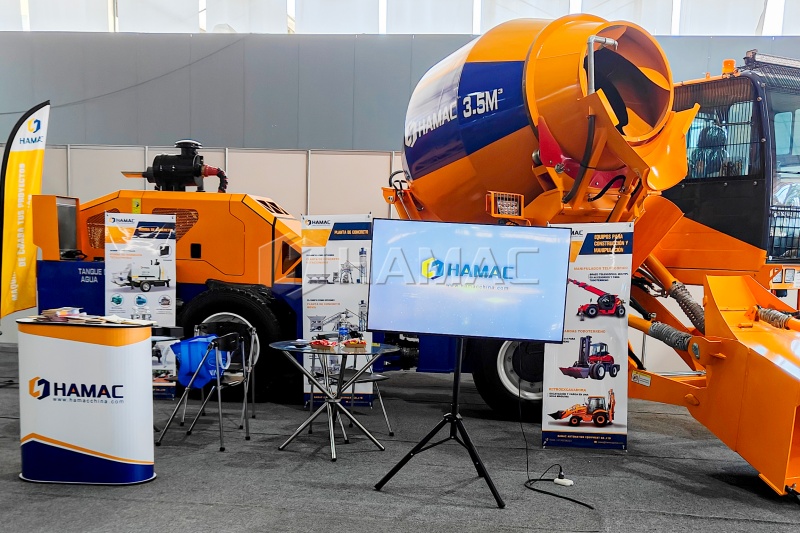 Company News
HAMAC Showcases Group Strength and Concrete Solutions at EXCON 2026
HAMAC showcases its concrete equipment solutions at EXCON 2026 in Peru, with Group leadership, Manager Teo and Peru branch head Carol highlig
Read more