A plant that runs at its rated output for years is the result of a few correct decisions at the start. This article explains a concrete batching plant and the choices that matter most for a mining infrastructure contractor using river pebble. The reference case is a 90 m3/h operation in Chile.
The operating context matters as much as the machine specification. In Chile, a mining infrastructure contractor works in a dry climate with strong temperature variation between day and night. A plant specified for this market normally includes heat management, dust control and materials rated for thermal cycling, and the layout is planned around river pebble rather than a generic aggregate.
What drives the purchase price
Two quotations for the same nominal capacity can differ by 30 percent or more. The difference usually sits in steel plate thickness, mixer gearbox and liners, load cell brand, control system, silo capacity and the scope of the delivery. A quotation that excludes silos, screw conveyors or the control cabin is not comparable with one that includes them.
The more useful comparison is cost per cubic metre over the life of the plant. A heavier structure with better wear parts costs more at the start and less every year afterwards, because it needs fewer repairs and holds calibration longer.
Common faults and their causes
Weight errors usually trace back to a drifting load cell, a gate that does not close fully or material stuck on the weighing frame. Slow discharge is normally a worn gate seal or a discharge height that forces the truck to reposition. Mixer noise points to bearing wear or a loose blade arm.
Electrical faults are frequently environmental: moisture in a junction box, dust on a contactor or a voltage drop on a long supply cable. A plant installed with a proper earthing system and a stabilized supply suffers far fewer of these interruptions.
Twin shaft compulsory concrete mixer used in batching plants — HAMAC equipment supplied to concrete and aggregate projects worldwide.
Dry mix mortar plants are a different design
A dry mix mortar plant shares the silo and weighing concept with a concrete plant but not the process. Sand must be dried and screened before batching, and the mixer is a paddle or plough type designed for powder blends rather than wet concrete. Adding water on site is done by the user, not by the plant.
The practical consequence is that a concrete batching plant cannot be converted into a mortar plant by changing the mixer alone. Drying capacity, dust collection and packing lines are the parts that decide whether the plant can produce a saleable bagged product.
Selecting a supplier
Ask for the steel plate thickness of the batching machine and the mixer shell, the brand and model of the gearbox and load cells, and the control system architecture. These four items explain most of the price difference between suppliers and most of the reliability difference in service.
Ask also for reference plants in a similar climate and duty. A plant running well in a temperate climate with dry aggregates may need different sealing, painting and electrical protection in a coastal or desert environment. References from comparable conditions are worth more than a specification sheet.
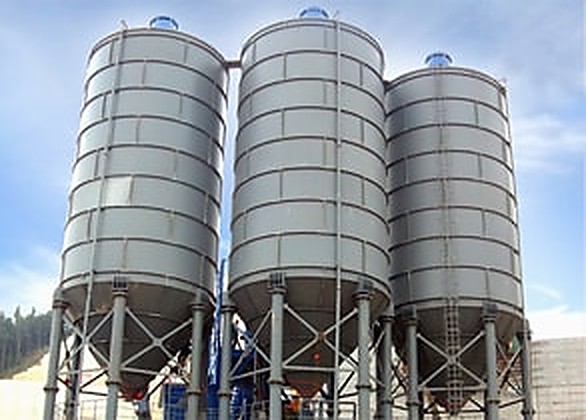
Welded cement silo with screw conveyor and pressure relief valve — HAMAC equipment supplied to concrete and aggregate projects worldwide.
Matching plant capacity to real daily demand
Capacity is usually quoted as theoretical output per hour, measured with a fully charged batching machine and a continuous supply of aggregates. Real output is lower because batching, charging, mixing and discharge overlap with truck changes and quality checks. A reliable planning figure is 75 to 85 percent of the rated value for a well-run plant.
Start from the concrete volume required on the busiest day rather than the average day. Divide that volume by the productive hours in a shift, then add headroom for peaks. A plant sized exactly to average demand will queue trucks whenever a large pour is scheduled.
Rated output
Typical realistic output
Usual application
HZS25 - 35 m3/h
20 - 28 m3/h
Small contractor, single site
HZS50 - 60 m3/h
40 - 50 m3/h
Commercial supply, small town
HZS75 - 90 m3/h
60 - 75 m3/h
Ready-mix supplier, mid-size city
HZS120 - 180 m3/h
95 - 145 m3/h
High-volume ready-mix, major projects
Stationary versus mobile configuration
A stationary plant is built on a concrete foundation with a fixed aggregate storage area. It offers the lowest cost per cubic metre over a long project, better access for wheel loaders and more room for silos and automation. It is the default choice when the site will operate for more than two years.
A mobile or portable plant sits on a steel frame with its own axle or skid. Setup takes days rather than weeks and the whole unit can be relocated behind a low-bed trailer. Output per hour is lower and aggregate storage is usually limited to a few compartments, but for road, rail and dam projects that move every season it removes the cost of repeated civil works.
Fixed site with more than two years of production: stationary plant
Project moving every 6 to 18 months: mobile or portable plant
Site with limited space and no room for a loader yard: compact mobile unit
Requirement for multiple silos and full automation: stationary plant
Layout rules that protect output
The layout decides how quickly a truck can be loaded and how easily a wheel loader can feed the aggregate bins. The most common mistake is placing the batching machine so that the loader has to reverse into the charging area, which adds 20 to 40 seconds to every batch cycle and increases the risk of contact with the plant structure.
Keep the truck lane straight and level, with a clear exit that does not cross the loader route. Allow a minimum turning radius for the largest mixer truck in the fleet, and leave space for a second truck to wait without blocking the discharge area. The control cabin should have a direct line of sight to the discharge point and to the aggregate bins.
Where to go next
For the equipment side, see concrete batching plants; for plant-level design and layout questions, see concrete production solutions. If the project is in Chile or a comparable market, the HAMAC team can provide reference installations and a configuration proposal against your daily output target.
Send the daily volume, mix types and site conditions to HAMAC engineers and you will receive a configuration and a quotation, normally within one working day.
Need help applying this to your project?
Send your material type, target output and site conditions to HAMAC engineers. You will receive a practical equipment configuration and a clear quotation, normally within one working day.
Questions about this topic
Can a batching plant produce different concrete grades?
Yes. Recipes are stored in the control system and selected per truck. Changeover time depends on whether the aggregate fractions and binder type are the same.
How much space does a batching plant need?
A 60 m3/h stationary plant typically needs about 1,200 to 1,800 square metres including aggregate storage, truck lanes and the control cabin. Mobile plants need less because storage is integrated.
How accurate is batching on a standard plant?
Cement and water are normally within plus or minus one percent and aggregates within plus or minus two percent, provided the load cells are calibrated with test weights and the discharge gates close cleanly.
H
HAMAC Machinery Editorial Team
Written and reviewed by engineers and sales specialists who configure concrete batching plants, crushers, mixers and pumps for projects in more than 180 countries. Content is based on factory testing data and field feedback from delivered equipment.






 Company News
