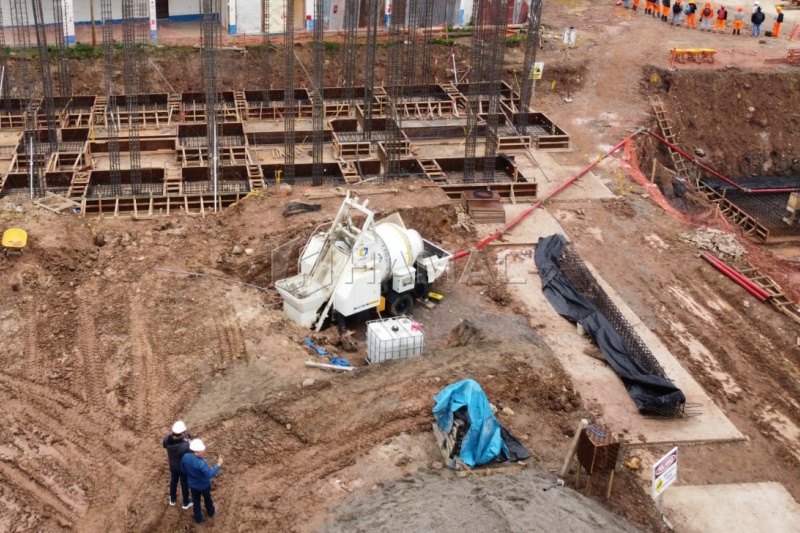
Our concrete mixer pump can transport the concrete to the specific site quickly, which greatly improves the working efficiency and reduce the labor intensity. As we all know, the cement mixer with pump has wide application on various construction industries, such as, tunnel construction, road construction, bridge construction, building construction, etc. Of course, you also can use the cement mixer and pump to cast foundation, floor, fish pond, slope roof, culvert and so on.
Due to its stable performance and high working efficiency, our concrete mixer hydraulic pump has won good reputation from our customers. In addition, because of its small in size and light in weight, our mixer pump also can be used in the narrow and rural area. Even if in the narrow area, the cement mixer pump also can work normally.
What’s more, our diesel engine concrete and pump can work at any place, not subject to site electrical conditions. Welcome to purchase a satisfied concrete mixer pump from our HAMAC Machinery!
Advantages of HAMAC concrete mixer with pump
High efficiency. The construction companies are in high demand in Indonesia. That is why a high-output concrete mixer pump will work wonders when they have to finish multiple projects within a short deadline. Companies that are planning to buy a cement mixer with pump machine should make sure they focus on the efficiency of the mixer and the pump. This is a stationary unit. So, it should have more capacity than the ones that are usually available in the market.
Simple operation. After getting your concrete mixer and pump for sale, it just takes you few hours to install the machine successfully. And then, it can start to work fast. Moreover, you just need to hire three or four workers to control the whole process. This can not only reduce the labor intensity, but also save your labor cost.
Besides these advantages, our concrete mixer and pumping machine also has the benefits of small investment and quick return, stable performance, small size and light weight, quick installation, easy maintenance, safe operation and so on.





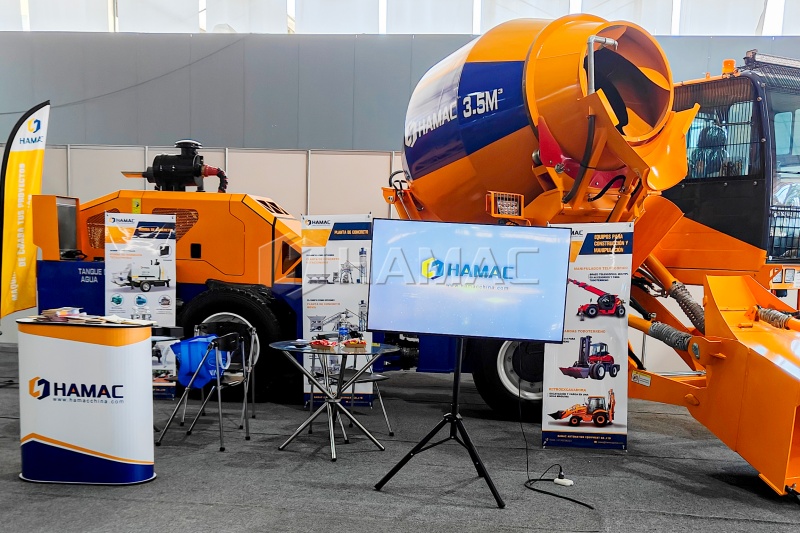
 Exhibitions