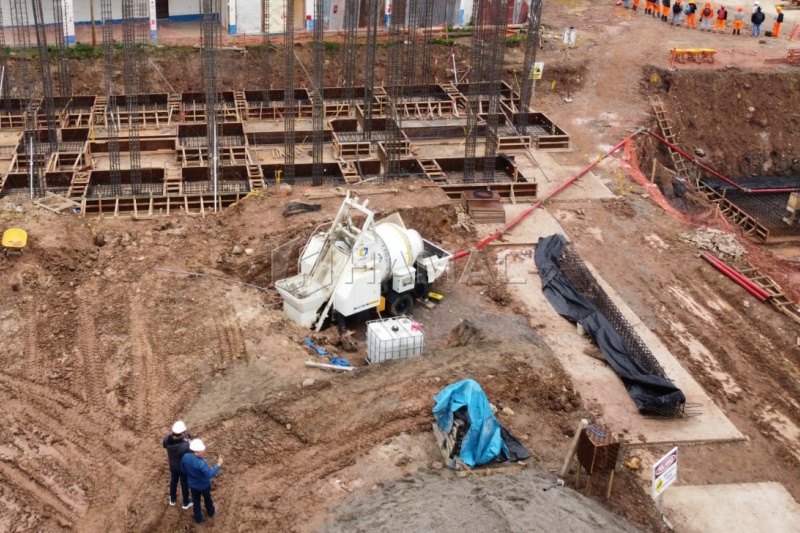
Skid steer loader is also called skid steer loader, multifunctional construction vehicle, multifunctional construction machine. It is a kind of wheeled special chassis equipment that uses the difference in linear speed between the two sides of the wheels to achieve vehicle steering, using a wheeled walking mechanism, all-wheel drive, skid steering, can be randomly and quickly replaced or hooked up to a variety of work devices at the work site to adapt to different working environments and work content. Skid steer loader power is generally 20 ~ 50 kilowatts, the host mass of 2000 ~ 4000 kg, the speed of 10 ~ 15 km per hour, about mainly used in the narrow operating site, the ground is undulating, frequent changes in the work content of the occasion, suitable for infrastructure construction, industrial applications, dock loading and unloading, urban streets, housing, barns, barns, airport runways, etc., but also as Large construction machinery auxiliary equipment use.
The biggest feature of the skid steer loader is the small size of the whole machine and the ability to steer in place; it can be randomly and quickly replaced or hooked up to various work devices at the operating site. Its uses are mainly in the following areas.
(1) Because its minimum turning radius is less than half that of articulated loaders of the same class, it is particularly suitable for operations in narrow sites such as urban infrastructure, roads or construction sites, plant workshops, warehouses, docks, ship decks and even ship cabins.
(2) Adopting all-wheel drive, without inter-wheel differential, is conducive to the operation on undulating sites.
(3) It is possible to change or hook up different working devices at the work site in an instant, generally within a few minutes. Thus, it can carry out shoveling, stacking, lifting, digging, drilling, crushing, grabbing, pushing and grubbing, loosening, trenching, road cleaning and road compaction, etc.
(4) It is used for logistic support of large construction machinery, site cleaning and project closing operations.
(5) It can be used as a mobile pumping station to provide power source for hydraulic tools such as hand-held hydraulic picks.
Need help applying this to your project?
Send your material type, target output and site conditions to HAMAC engineers. You will receive a practical equipment configuration and a clear quotation, normally within one working day.
Questions about this topic
How do I choose batching plant capacity?
Estimate the concrete volume per day, then divide by the effective working hours. Add 20 to 30 percent headroom for peak demand. A 35 m³/h plant suits small contractors; 50 to 75 m³/h suits commercial supply; 90 m³/h and above suits large projects.
Which mixer type should I choose for my concrete?
Twin-shaft compulsory mixers are the default for commercial concrete because of short mixing cycles and uniform output. Planetary mixers suit high-grade or special mixes, and drum mixers suit smaller, simpler operations.
How often should wear parts be replaced?
Mixer blades and liners are inspected weekly and normally replaced every 6 to 12 months depending on abrasive content. Belt scrapers, screen meshes and pump wear plates follow the same inspection rhythm.
Can the plant be upgraded later?
Yes. Modular batching plants allow additional silos, a larger mixer or an upgraded control system to be added later without replacing the whole structure.
H
HAMAC Machinery Editorial Team
Written and reviewed by engineers and sales specialists who configure concrete batching plants, crushers, mixers and pumps for projects in more than 180 countries. Content is based on factory testing data and field feedback from delivered equipment.





 Exhibitions